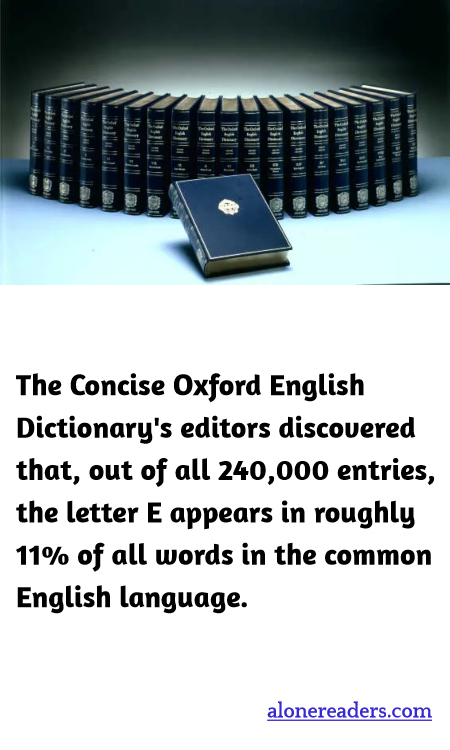
The letter E is undoubtedly a cornerstone in the architecture of the English language. A fascinating discovery by the editors of the Concise Oxford English Dictionary highlights that E appears in about 11% of all words across its 240,000 entries. This statistic underscores the prevalence and flexibility of E within our linguistic systems, making it one of the most utilized vowels in English. The letter E’s versatility can be attributed to its phonetic qualities. It figures prominently in many parts of speech, encompassing a broad spectrum of sounds from the sharp zealous "e" in "bee" to the subtle muted "e" in "taken."
This prevalence also extends into various forms of English writing and literature. The ubiquitous nature of E affects rhyming schemes, phonetic fluency, and ease of pronunciation, making it a favorite among poets and novelists. Moreover, the frequency of E in the English language highlights deeper patterns within word formation rules and morphological processes. Its presence in various prefixes and suffixes, as well as in common grammatical endings, demonstrates its critical role in the construct of the language.
Furthermore, the statistical prominence of the letter E reflects interesting psychological and physiological responses. Studies in psycholinguistics suggest that because the letter E appears so often, it is generally quicker to recognize and process, potentially speeding up our reading and comprehension skills. The frequency of E also influences language learning, making it a pivotal element for non-native speakers to acquire early in their studies.
Overall, the degree to which the letter E is woven into the English language fabric positions it not just as a mere vowel, but as a significant structural component that supports both the complexity and the fluidity of English expression. This seemingly simple statistic reveals deeper insights into the characteristics that shape our communication and understanding of one another through language. Such discoveries continue to prove invaluable in areas ranging from educational methodologies to the development of AI in natural language processing, demonstrating that even the smallest units of language hold profound impacts on widespread linguistic practices.
