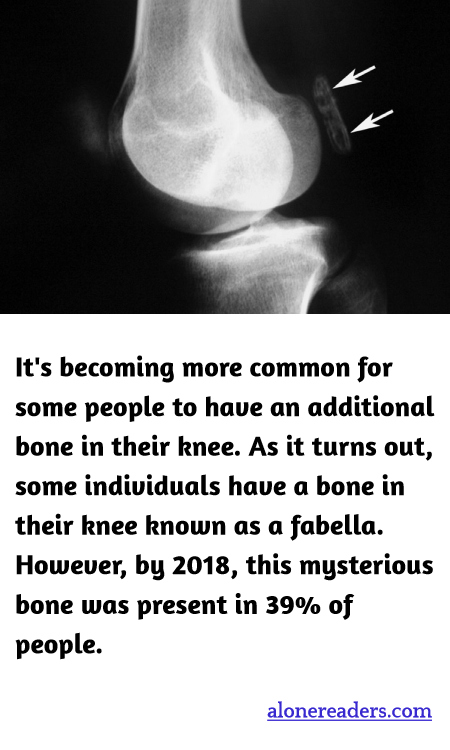
The fabella, a small bone found in the knee, is becoming an increasingly common anatomical anomaly among humans. Historically considered a rare occurrence, it was found in roughly 39% of the global population by 2018, according to medical studies. The fabella is a sesamoid bone, which means it is a bone embedded within a tendon. It sits in the tendon of the gastrocnemius muscle, the major calf muscle, behind the knee.
The presence of a fabella can be linked to genetic factors and mechanical stimuli, and its prevalence appears to be rising with time. This could be attributed to better nutrition and overall increase in human body size, as sesamoid bones are thought to develop in response to mechanical forces. In some people, the fabella can be asymptomatic, going completely unnoticed throughout their lives. However, in others, it can cause discomfort and problems such as knee pain, reduced mobility, and may even complicate knee replacement surgeries.
The resurgence of the fabella over the years is an interesting topic for anthropologists and biologists, as this could be an evolutionary trend. Interestingly, research suggests that the fabella was more common in human ancestors and reduced in prevalence over thousands of years, only to make a comeback in modern populations. This could be due to the changes in physical activity patterns and body mechanics of contemporary humans.
Although having a fabella is not necessarily harmful, those who experience discomfort may need to consider medical options. Pain related to the fabella can often be managed with physical therapy, medication, or in rare cases, surgical removal of the bone. As the medical community continues to uncover the mysteries of the human body, the fabella offers a unique perspective on how our bodies adapt and evolve over centuries.
