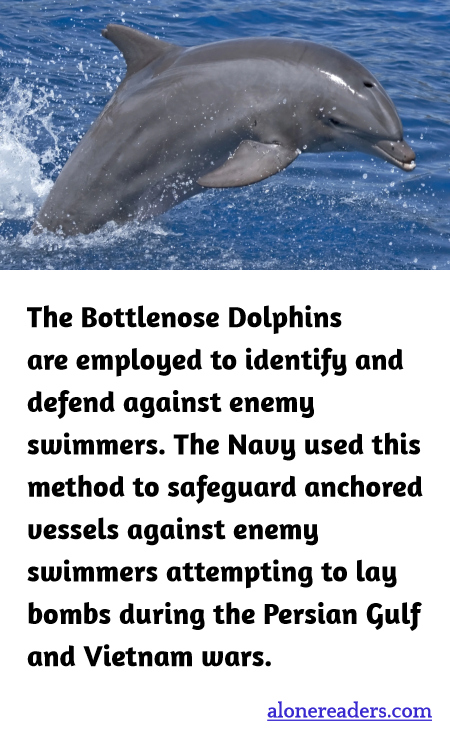
Bottlenose dolphins, with their sophisticated echolocation capabilities and high intelligence, have played a surprising and unique role in military operations. The U.S. Navy, recognizing the potential of these marine mammals, developed a program that trained bottlenose dolphins to detect and protect against underwater threats. This initiative was part of the Navy Marine Mammal Program (NMMP) which started in the 1960s and became highly active during the Vietnam War and later during conflicts in the Persian Gulf.
These dolphins are trained to identify enemy swimmers and divers who might pose a threat to naval ships and security by attempting to plant explosives. Dolphins naturally possess acute sonar abilities—far superior to any man-made sonar systems. Their echolocation allows them to detect items and individuals in the water by emitting clicks and listening for echoes. This ability makes them especially effective in murky waters where mechanical devices might fail.
During operations, dolphins are not used to harm but rather to mark the location of the threats. Trainers equip them with a device on their fins that, when triggered near a suspicious object or individual, releases a buoy to the surface. This allows Navy personnel to identify the potential threat's location quickly and take appropriate action.
The utilization of dolphins in military programs is not without controversy. Animal rights organizations have often raised concerns about the ethics and safety of involving animals in military endeavors. They argue that such activities could put the dolphins at risk and cause them undue stress. In response to these concerns, the Navy asserts that the animals are well-cared for, are kept in accordance with high veterinary standards, and are not used in direct attack missions.
Despite the ethical debates, the strategic use of bottlenose dolphins has undeniably added a unique asset to naval operations. Their deployment continues to demonstrate how natural abilities can be harnessed to enhance security measures in complex and high-risk environments. Whether these practices will continue in the future will likely depend on advancements in technology that could potentially replace live animals with machines that can mimic their natural skills. Nonetheless, the role of bottlenose dolphins in historical naval operations provides a fascinating example of human ingenuity in combining natural animal behaviors with military tactics.
