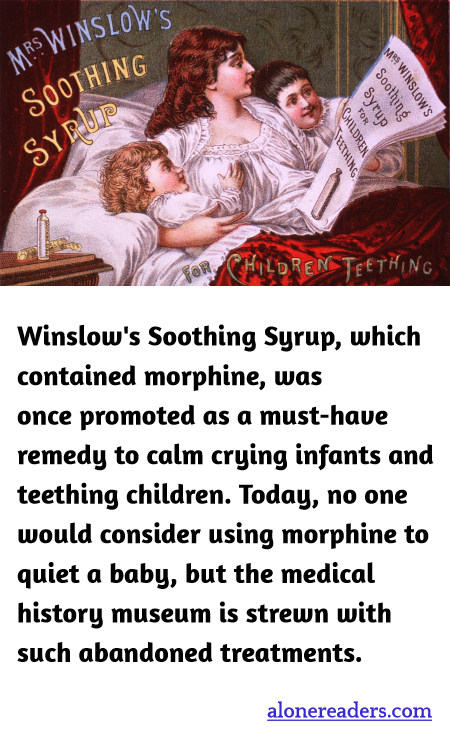
In the 19th and early 20th centuries, Winslow's Soothing Syrup was a popular remedy among parents for pacifying teething babies or those who wouldn’t stop crying. Promoted vigorously as an effective solution for calming distressed children, this syrup, like many other products of its time, contained ingredients that would raise eyebrows today – chief among them, morphine. The presence of such a potent opiate highlights a period in medical history when regulations and knowledge about potential dangers were markedly less developed than they are today.
As medical science advanced, awareness about the dangerous side effects and the high addictive potential of opiates like morphine grew. Gradually, medications containing such substances were either taken off the market or their usage tightly controlled. It became clear that substances like morphine posed significant health risks, particularly to younger, more vulnerable bodies whose early developmental stages could be severely impacted.
The discontinuation of Winslow’s Soothing Syrup represents just one chapter in the broader narrative of evolving medical standards and practices. Like many outdated medical treatments once thought beneficial, the use of morphine in children’s medicine is now viewed under a lens of incredulity through modern medical understanding. This shift underscores not only advances in medical knowledge and ethics but also the importance of regulatory frameworks in ensuring public safety.
Today, such historical curiosities serve educational purposes, illustrating both how far medical science has come and as reminders of the continual need for scrutiny and adaptability in healthcare practices. They also underscore the need to bridge the gap between medical myths and scientifically-backed treatments, a challenge that continues to shape contemporary health debates and policies. Treating ailments, particularly in children, is now approached with more caution, and the focus has sharply shifted towards evidence-based methods, underscoring a collective advancement in healthcare and patient safety.
