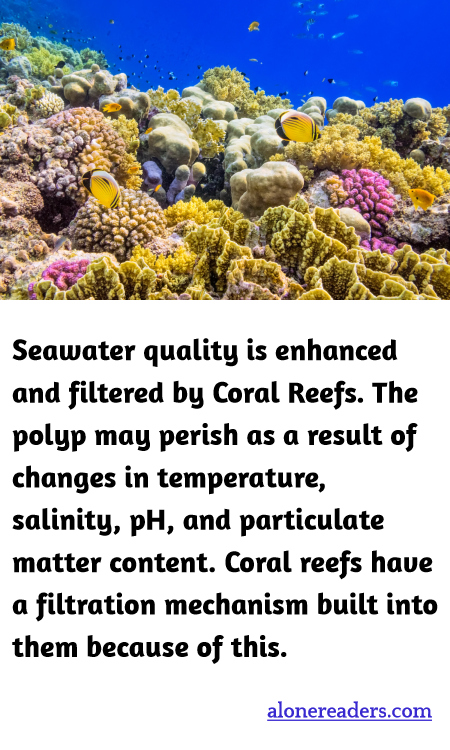
Coral reefs, often described as the rainforests of the sea, play a critical role in maintaining the quality of seawater. These vibrant underwater ecosystems are not only spectacular in beauty but also function as effective natural water filters. The structure of coral reefs and the biological processes within them are essential to the purification and enhancement of ocean water quality.
Coral reefs are composed of colonies of tiny living animals called polyps. These polyps secrete limestone (calcium carbonate) to form a hard skeleton that constitutes the structure of the reef. The coral's structure, with its myriad of nooks, crannies, and surfaces, facilitates the processing and filtration of the surrounding seawater. As water flows over and through the reef, particulate matter—such as plankton, algae, and organic debris—is trapped and utilized by the reef's inhabitants. This filtration process not only clarifies the water but also helps in the deposition of nutrients which are critical for marine life.
The health of coral polyps is vital for the maintenance of these processes. Polyps are sensitive to their environment; changes in temperature, salinity, pH, and the content of particulate matter can significantly impact their health and functionality. Global warming and related phenomena like ocean acidification and sea-level rise alter water conditions, and an increase in water pollution contributes added stress. When stressed, polyps may expel the symbiotic algae living in their tissues, a fundamental process for their survival, leading to coral bleaching—a state that significantly diminishes the reef's ability to filter water and support marine life.
Moreover, healthy coral reefs act as barriers to shorelines, reducing the power of waves and preventing soil erosion, further aiding in the preservation of water quality by minimizing sediment run-off. This barrier function not only protects the purity of coastal waters but also the clarity and quality of seawater around the reef.
The conservation of coral reefs is thus crucial not only for marine biodiversity but also for the quality of ocean environments. Preserving these reefs helps in maintaining the balance of marine ecosystems and ensures the clarity and health of ocean water which is vital for numerous marine and terrestrial lives. Hence, safeguarding coral reefs isn't merely about preserving a stunning natural beauty but about maintaining the natural filtration system that keeps our seawater clean and healthy for generations to come.
