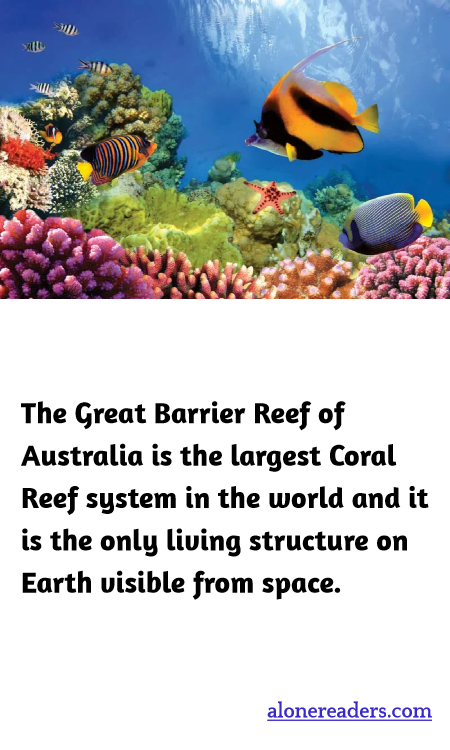
Spanning over 2,300 kilometers along the Queensland coast of Australia, the Great Barrier Reef holds the prestigious title of being the largest coral reef system in the world. Comprised of over 2,900 individual reefs and 900 islands, this underwater spectacle is teeming with life and vibrant colors. The reef system is made up of billions of tiny organisms known as coral polyps, which collectively form reefs and atolls that are not only stunningly beautiful but also ecologically critical. The Great Barrier Reef supports a vast diversity of life, including many species that are endangered or unique to the reef ecosystem.
This breathtaking natural wonder is the only living structure on Earth visible from space, showcasing its vast scale and significant presence on the planet. The reef's visibility from space underscores its immense size and its important role in marine life. The diverse ecosystems within the Great Barrier Reef are home to a myriad of species, including fish, sea turtles, sharks, dolphins, and countless species of birds and smaller marine organisms. The Reef also provides valuable services to the environment, such as protection of coastal areas from storm damage and erosion.
However, this majestic natural landscape faces numerous threats, primarily from climate change, which leads to coral bleaching, water pollution, fishing, and unchecked tourist activities that can harm the reef's delicate ecosystems. Large-scale coral bleaching events have raised concerns about the future sustainability of the reef, with rising sea temperatures stressing the coral to a point where they expel the symbiotic algae living in their tissues, causing them to turn white and become more susceptible to disease.
Efforts to protect and preserve the Great Barrier Reef have increased as its health continues to decline. Various environmental organizations, along with the Australian Government, have initiated protection programs aimed at reducing pollution, managing fisheries, and curbing illegal coral harvesting. The reef has also been designated a World Heritage site since 1981, which has helped elevate the global awareness and importance of its conservation.
While hurdles remain large, continuing global and local efforts to mitigate the effects of human and environmental pressures on the Great Barrier Reef are crucial for its survival and health. Being a critical part of the marine biodiversity and the human heritage, the preservation of the reef is not only integral to environmentalists but for humanity as a whole. Thus, its conservation continues to be a global priority, not just to maintain its biological diversity and ecological integrity but to sustain the cultural and economic livelihoods that depend heavily on its existence.
