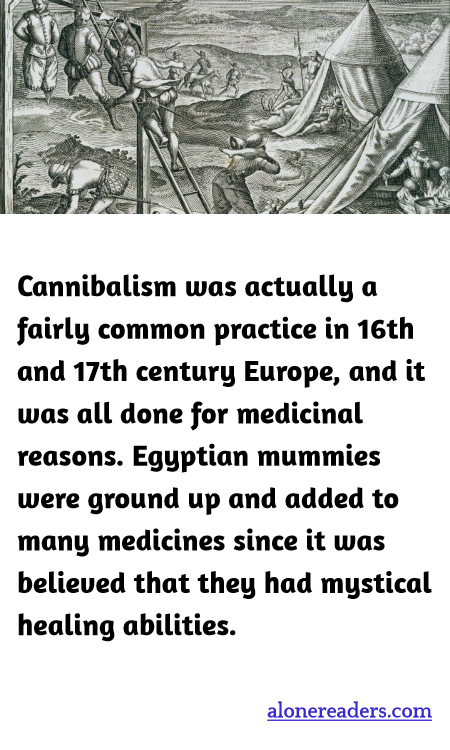
Cannibalism in 16th and 17th century Europe, particularly in its medicinal form, paints a bizarre and somewhat macabre picture of early modern medicine. Unlike the violent or survival-driven cannibalism that often pops to mind, this practice was rooted in a complex web of beliefs about health and the body. It's a startling fact that powdered Egyptian mummies were commonly consumed as a treatment for various ailments. This practice, known as "mummia," involved apothecaries and merchants who traded in these exotic remnants, believed to possess mystical healing properties due to their ancient origins and the embalming substances used.
The corpses of mummies were ground into a fine powder and added to concoctions intended to cure everything from headaches to stomach ulcers. The mummy was not the only human-derived substance in use; blood and skull were also components believed to possess therapeutic qualities. Skull moss, for example, which grew on the skulls of the unburied dead, was thought to be particularly effective for treating head ailments. Meanwhile, King Charles II of England was known to enjoy "The King’s Drops," a restorative tincture that included human skull in its ingredients.
The underpinning philosophy for these medicinal practices was the theory of the ‘doctrine of signatures’, which posited that natural substances that resemble parts of the body can be used to treat ailments of those body parts. This intersected with the belief in the potent power of the "exotic". Ingredients that were foreign and ancient, especially from the mystical lands of Egypt, were considered inherently more powerful.
As science and medicine evolved, these practices began to fade, replaced by more enlightened views on human anatomy and medical treatment that form the basis of modern medicine. However, this fascinating historical episode offers a vivid insight into the ways in which cultural and supernatural beliefs have intertwined with medical practices, reflecting deep human concerns about life, death, and health.
