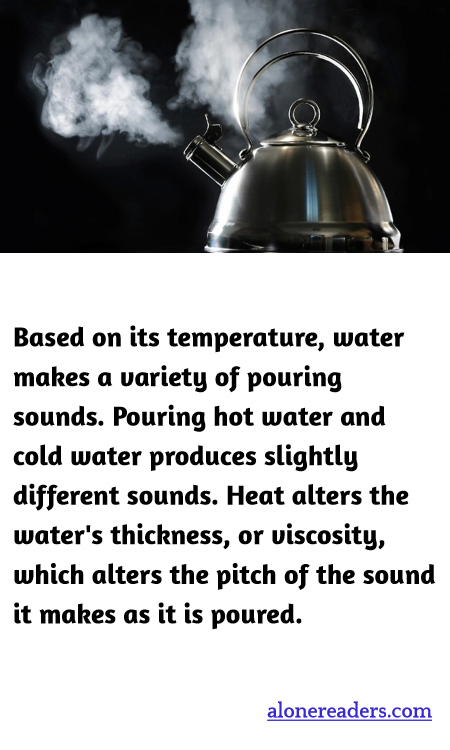
When pouring water, you might not expect the temperature to affect the sound it makes, yet this seemingly simple action reveals a subtle interplay of physics and perception. The phenomenon where hot water and cold water produce distinct sounds when poured can be attributed primarily to differences in viscosity and bubble formation.
Water's viscosity, which is its resistance to flow, decreases as temperature increases. Hot water has a lower viscosity compared to cold water, enabling it to flow more freely and quickly. This difference in flow rate affects the sound made during pouring. When cold water is poured, its higher viscosity results in a slower, more controlled flow, which typically generates a deeper, more muffled sound. On the other hand, hot water, with its lower viscosity, pours more rapidly and produces higher frequency sounds.
Moreover, the temperature of the water influences the formation and behavior of bubbles. Pouring hot water leads to quicker and more abundant bubble formation compared to cold water. As these bubbles escape the water, they burst, contributing to the higher-pitched, sharper sounds associated with pouring hot liquid. Conversely, cold water’s lesser tendency to form bubbles results in fewer bubble bursts and thus, produces lower, more subdued sounds.
This intriguing difference also has practical implications, such as aiding visually impaired individuals to discern the temperature of the water by sound, enhancing their safety and independence. Similarly, this knowledge can enhance the sensory experiences of various everyday activities and tasks, providing an additional layer of interaction with our environment.
In conclusion, the distinct sounds produced by hot and cold water when poured not only serve as a fascinating example of physical principles at work but also enrich our understanding and interaction with the simple elements of our environment. This subtle detail highlights the complex characteristics of water and reminds us of the intricate ways in which the physical properties of substances can impact our sensory perception.
