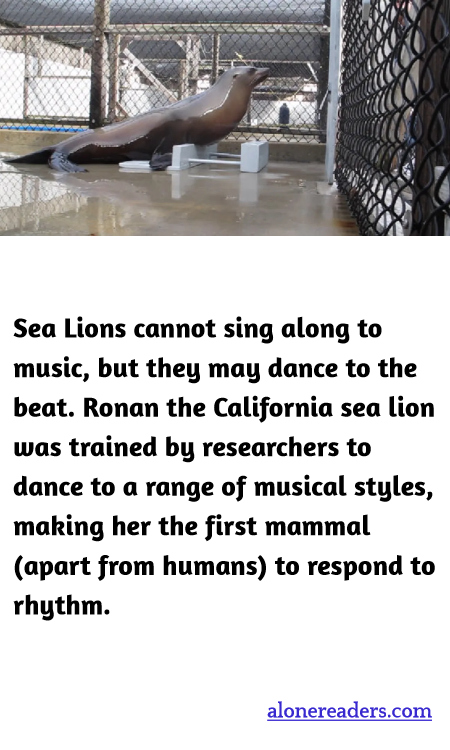
Sea lions, with their playful nature and intelligence, have long captivated the attention of scientists and animal enthusiasts alike. Among these fascinating creatures, a California sea lion named Ronan stands out due to her remarkable ability to move in sync with a musical beat. Ronan's trainers from the Long Marine Laboratory at the University of California, Santa Cruz, discovered that she could bob her head in time with various tunes, showcasing a rhythmic talent that was once believed to be exclusive to humans.
The study of Ronan began when researchers noticed her ability to follow repetitive sounds. They cultivated this skill into rhythmic movement by slowly introducing music into her training sessions. Different genres were played, from pop to classical, and Ronan demonstrated her ability to adapt her movements to the tempo changes and beat variations of each song. This ability is significant as it challenges the prevailing theories about the biological origins of rhythmic ability.
Previously, it was thought that only species capable of vocal mimicry, such as birds like parrots or creatures like humans, could keep the beat. This capability was considered tied to the auditory circuitry in the brain, which is also involved in copying sounds. Ronan, however, cannot mimic sounds or sing, which suggests that the ability to perceive rhythm might be more broadly distributed in the animal kingdom than previously believed.
This finding not only broadens our understanding of how and why the ability to perceive and react to music evolved but also sheds light on the cognitive processes of non-human animals. It indicates that the basis for musical beat synchronization may lie in brain mechanisms that are not exclusively linked to vocal mimicry.
In broader terms, Ronan's dancing ability may prompt further research into how other species perceive and interact with sound, and whether the capacity to process and respond to music is more universal than currently thought. It also raises intriguing questions about the evolutionary advantages of being able to move in time with sounds, whether for social bonding, communication, or even survival.
Indeed, Ronan the sea lion's dances to the beat may not be a singing performance, but they are a remarkable exhibition of the complexity and wonder of animal behavior, challenging our assumptions and opening new avenues of scientific inquiry into the musical abilities of non-human species.
