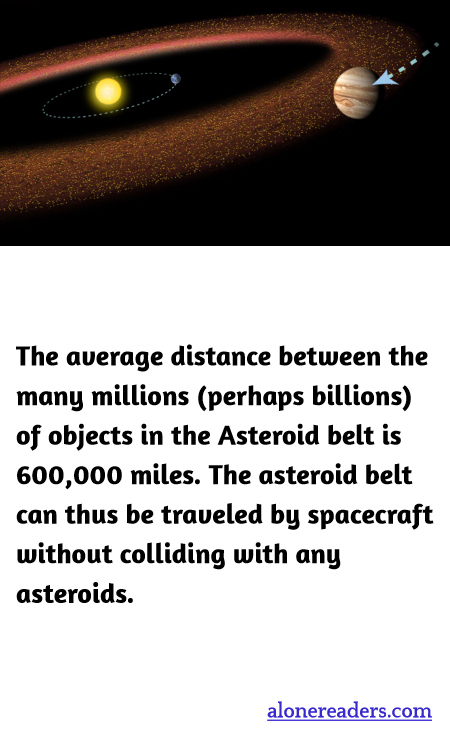
The asteroid belt, a torus-shaped region nestled between the orbits of Mars and Jupiter, is often depicted in science fiction as a densely packed hurdle of tumbling rocks, posing significant navigational challenges. However, this portrayal is far from accurate. In reality, the asteroid belt is quite sparse, making it surprisingly navigable for spacecraft.
Contrary to popular belief, the asteroid belt is not crammed with closely-packed asteroids but is composed of a vast expanse where the average distance between individual objects is about 600,000 miles. Given this generous spacing, the probability of a spacecraft encountering an asteroid is exceedingly low, which reassures mission planners plotting trajectories through this region.
The perceived image of a crowded asteroid belt may stem from misunderstanding or visual exaggerations in media. Although it contains millions, possibly billions, of objects ranging from tiny dust particles to larger bodies like dwarf planet Ceres, the immense area of the belt ensures these objects are spread out over about 140 million square miles. This vast distribution space explains why successful missions, such as those by NASA's Dawn spacecraft or the Galileo probe, have traversed the belt without incident, traveling vast distances without any high-risk encounters with asteroids.
Navigating through the asteroid belt requires careful calculation and planning, but the main challenge isn't dodging dense clusters of asteroids, as might be expected. Instead, the focus is often on optimizing the spacecraft's trajectory for speed and fuel efficiency, with minimal need for sudden maneuvers to avoid collisions. Astronomers and engineers utilize detailed maps and models that track known objects within the belt, ensuring a clear path is plotted for each mission.
In summary, space travel through the asteroid belt is less about weaving through a cosmic minefield and more about precise, calculated navigation across enormous distances of empty space. The belt’s sparse nature reduces the risk of impacts with asteroids, contributing to the growing feasibility of missions to the outer solar system and enhanced understanding of these primordial components of our solar neighborhood. As technology and mapping techniques improve, navigating the asteroid belt will likely continue to pose minimal threat to the missions daring enough to cross it.
