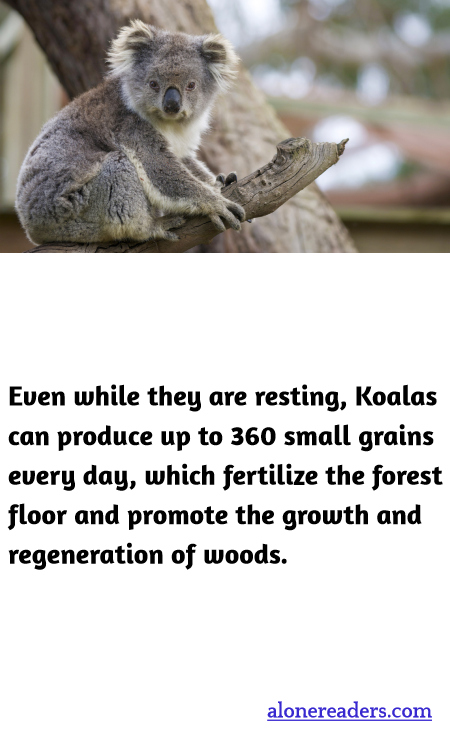
Koalas, often recognized primarily for their adorable appearance and sleepy lifestyle, play a crucial yet understated role in their ecosystems. Beyond their endearing façade, these marsupials inadvertently contribute to the fertility and health of their environments through their fecal matter. They produce up to 360 small fecal pellets each day, which is a notable rate of output. These pellets are not merely waste; they are packed with partially digested eucalyptus leaves, which is primarily what koalas eat.
The frequent deposition of these pellets across the forest floor serves a dual purpose. Firstly, it helps promote soil fertility. The breakdown of the pellets by decomposers like bacteria and fungi facilitates the release of nutrients back into the soil. These nutrients, in turn, enrich the soil and make it more conducive for plant growth, fostering a healthier forest ecosystem. Secondly, koala feces can aid in the spread of eucalyptus seeds. Some seeds may survive the digestive process and get dispersed far from the parent tree, improving gene flow and diversification among eucalypt forests.
Moreover, the continuity of this process is vital for the regeneration of the woodlands. Healthy forests are not only crucial for the koalas themselves but are beneficial for countless other species that share their habitat. These forests serve as carbon sinks, help regulate the climate, and protect against erosion.
However, despite their environmental contributions, koalas face significant threats from habitat destruction, disease, and climate change. The gradual loss of their natural habitat reduces their available living and foraging space, consequently hindering their ability to contribute effectively to forest regeneration. Conservation efforts are thus essential to ensure that koalas continue to thrive and maintain their role in ecological fertilization and forest health.
It's clear that koalas are more than just sleepy tree-dwellers; they are active participants in their ecosystems, contributing to the cycle of life through what might seem like the most unassuming of methods.
