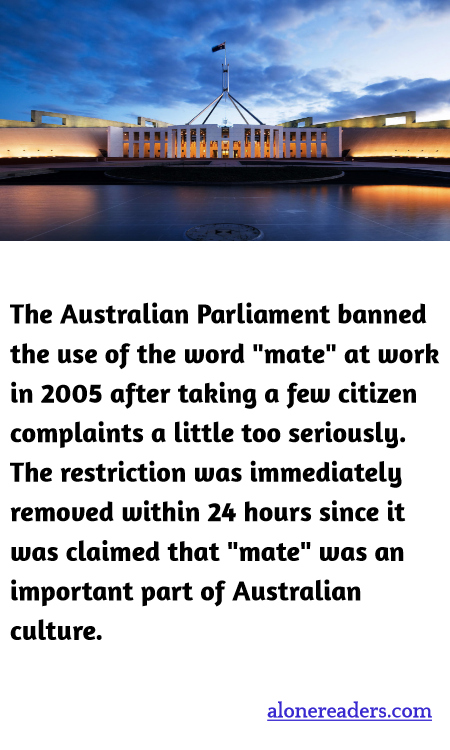
In a surprising move that caused a stir nationally, the Australian Parliament briefly banned the use of the word "mate" in the workplace in 2005. This decision was made after a few citizen complaints were presumably taken too seriously by lawmakers. The term "mate," which is deeply ingrained in Australian vernacular and culture, is commonly used as a friendly or colloquial salutation similar to "friend" in other parts of the English-speaking world.
The ban sparked immediate backlash from the public and media alike, highlighting the term’s cultural significance and its role as a staple in everyday Australian communication. Critics of the ban argued that using "mate" was an integral part of Australian identity and social etiquette, representing a sense of equality and camaraderie among people, regardless of their social status or background.
The controversial ban lasted less than 24 hours before it was rescinded, following widespread criticism and ridicule. This rapid reversal is seen as a testament to the strong cultural attachment Australians have to the term. It was also a clear demonstration of the government recognizing its misstep in trying to regulate a piece of linguistic culture that held more significance to the national identity than anticipated.
The incident served as an interesting case study on how language evolves and is protected by its speakers. It also highlighted the challenges that governments face when attempting to impose restrictions on language use, especially when such terms are deeply embedded in the cultural fabric of a nation. The swift removal of the ban reassured the public that their cherished word "mate" could still be used in all contexts, from the casual to the formal, reinstating a cherished piece of Australian linguistic heritage.
