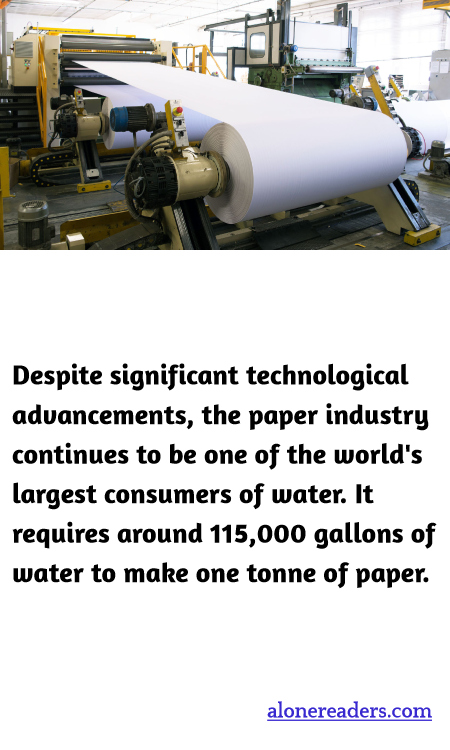
The paper industry, despite significant leaps in technological advancements, remains a major consumer of water, highlighting the environmental challenges and the persistent demand for sustainable practices. Producing just one tonne of paper necessitates approximately 115,000 gallons of water, a staggering statistic that underscores the resource-intensive nature of paper production.
This extensive water usage not only impacts local water supplies but also contributes to greater environmental degradation. Water is integral at almost every stage of paper manufacturing, from the pulping process to the final rinsing of the finished product. Consequently, the depletion of water resources can have profound effects on ecosystems and communities, particularly in water-scarce regions where the competition for water resources is intense.
Such high levels of water consumption have spurred calls for the paper industry to adopt more sustainable practices. Innovations in recycling used paper can significantly reduce water use, as producing recycled paper generally requires less water compared to virgin paper. Furthermore, advancements in water treatment technologies and process optimizations can also lead to more efficient water use, minimizing waste and reducing the overall environmental footprint.
Moreover, consumer behavior plays a critical role in this dynamic. The demand for paper propels production, and thus, a shift in consumer habits towards digital alternatives can make a substantial difference. Utilizing digital platforms for reading, note-taking, and communication reduces the reliance on paper, consequently decreasing the demand and the consequent environmental toll.
In summary, while the paper industry continues to rely heavily on water resources, a combination of technological innovations, improved industry practices, and changes in consumer behavior can potentially address these environmental challenges. Shifting towards more sustainable and efficient practices is not just beneficial for conservation efforts but is also critical to ensuring the long-term viability of water resources globally.
