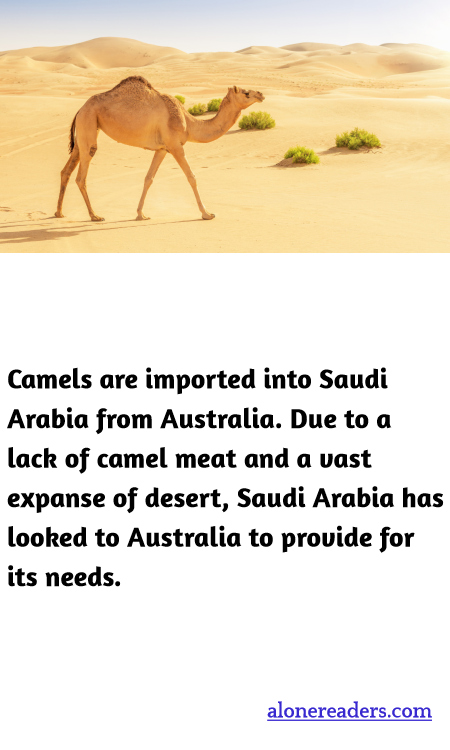
In an interesting turn of economic and environmental interdependence, Saudi Arabia, a country synonymous with desert landscapes, has been importing camels from Australia, a nation over 7,000 miles away. This might seem counterintuitive given Saudi Arabia’s vast arid regions that are naturally suited to camels. However, the reasons behind this importation stem from a mixture of historical, economic, and environmental factors.
Historically, camels in Saudi Arabia were primarily used as beasts of burden and an integral part of Bedouin nomadic life, vital for transportation and as a source of milk, meat, and hide. Over time, with the oil boom and modernization, the number of camels began to dwindle due to the decline in traditional herding and nomadic practices. Moreover, the camels that remain are more often used for racing, a popular and luxurious sport in the Gulf region, rather than for agricultural or food production purposes.
On the other hand, Australia has a booming camel population, initially introduced in the 19th century as transport and heavy labour before the advent of modern vehicles. These camels thrived in the Australian outback, adapting well to the environment similar to that of their native habitats. Consequently, Australia now faces an overabundance of these animals, which are considered an invasive species causing harm to the local ecosystem. In a bid to control their numbers and prevent further ecological damage, the Australian government has allowed for the culling and export of these camels.
Saudi Arabia, dealing with its shortage of camels for meat and potentially for breeding to sustain their numbers, turns to Australia as an ideal source. This trade not only addresses Saudi Arabia’s need for camel meat, which is a staple in many traditional dishes and a source of protein, but it also helps Australia manage an environmental issue.
This international trade of camels from Australia to Saudi Arabia is a prime example of how global needs can lead to surprising partnerships. Such arrangements are beneficial mutually; Saudi Arabia secures a vital resource for its food security and cultural heritage, while Australia controls an ecological concern cost-effectively. It also underscores the complexities and interdependencies in our globalized world, where ecological issues in one part of the world can significantly impact the economic and social practices in another. This relationship between Australia and Saudi Arabia illustrates a unique form of trade revolving not just around conventional commodities like oil and minerals but also around the management of living resources in response to both ecological and cultural needs.
