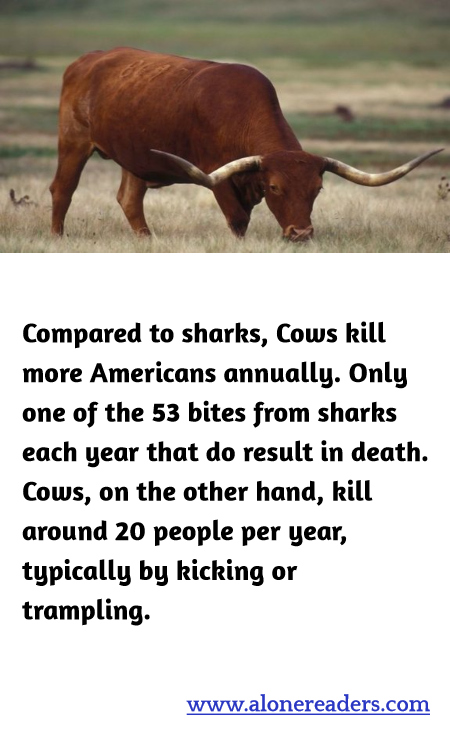
While sharks are often depicted as the menacing killers of the animal kingdom, surprisingly, it's cows that pose a greater threat to human life, at least statistically speaking in the United States. Each year, the fear of shark attacks captures the public's imagination, fueled by media portrayals and dramatic Hollywood storytelling. However, the reality is that shark attacks are extremely rare, and fatal encounters are even rarer. On average, there are 53 reported shark bites annually worldwide, but only a small fraction of these result in death.
In contrast, the humble cow, a staple of American agriculture and often perceived as docile and non-threatening, is responsible for more fatalities than their oceanic counterparts. Statistics show that cows kill approximately 20 Americans each year. These deaths are usually the result of kicking or trampling, incidents that may not grab as many headlines as shark attacks but are nonetheless tragic for those involved. The danger typically arises not out of malice, but from the sheer size and power of these animals, especially when they feel threatened or protective.
The reasons behind such attacks can often be linked to the behavior of the cows, which may become aggressive particularly during feeding times or when they perceive a threat to their calves. Farmers and others who work closely with cows are at most risk, especially when proper safety measures are not followed. Unlike the predatory nature of sharks, cow-induced fatalities are often the result of a defensive response triggered by fear or stress.
This striking difference in the perceived versus actual risk of animals like cows versus sharks highlights a significant disparity in human perception versus reality. While sharks may continue to inhabit the nightmares of swimmers and surfers, those interacting with farm animals are reminded that even seemingly benign creatures can become dangerous under certain circumstances. Understanding and respecting the nature of all animals is key to minimizing accidents and ensuring safety for both humans and animals.
