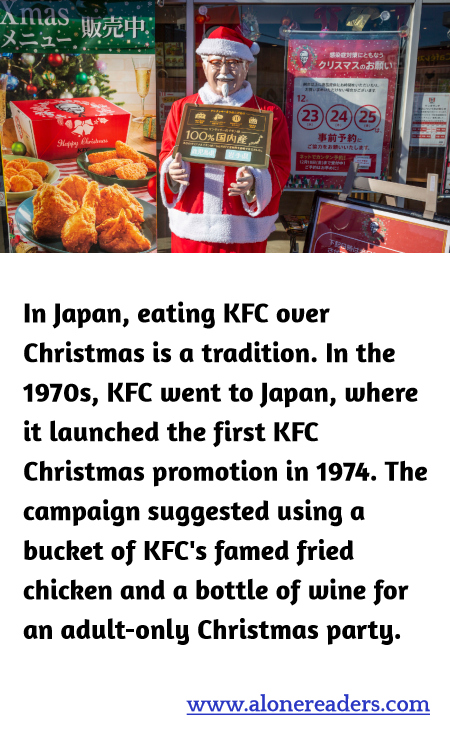
In Japan, the tradition of eating KFC for Christmas is a unique cultural phenomenon that illustrates how global brands can ingrain themselves into local traditions. This unusual custom dates back to the 1970s, following KFC's entry into the Japanese market. The genesis of this tradition was an incredibly successful marketing campaign called "Kurisumasu ni wa kentakkii!" which means "Kentucky for Christmas!" launched by KFC in 1974. The campaign cleverly tapped into the Western imagery associated with Christmas, catering to the Japanese fascination with American culture.
The campaign originally targeted adults, suggesting that a bucket of KFC's famous fried chicken and a bottle of wine could replace the traditional Japanese holiday meal, thus providing a simple and enjoyable way to celebrate the festive season. The concept quickly caught on, as Christmas was not a widely practiced holiday in Japan and lacked specific food traditions. KFC filled this void by positioning its chicken as a festive treat, which could be enjoyed by anyone looking to experience the holiday in a novel and easy way.
The idea turned out to be a massive hit, and eating KFC over Christmas became a widely practiced tradition in Japan. Every year, in the lead-up to Christmas, long lines form outside KFC outlets across Japan, with some customers even pre-ordering their meals weeks in advance to avoid the queues. The company also diversifies the menu during this period, sometimes adding special Christmas-themed items to enhance the festive feeling.
The tradition is sustained by continued marketing and the special emotional connection it creates by being part of family celebrations. Interestingly, this practice has been embraced despite the majority of Japanese not identifying as Christian, which demonstrates the secular nature of modern Christmas celebrations in Japan and the power of marketing in shaping consumer behavior around holidays. KFC's Christmas marketing in Japan is an exemplary case of how a brand can successfully integrate into a different culture and create new traditions that last for decades.
