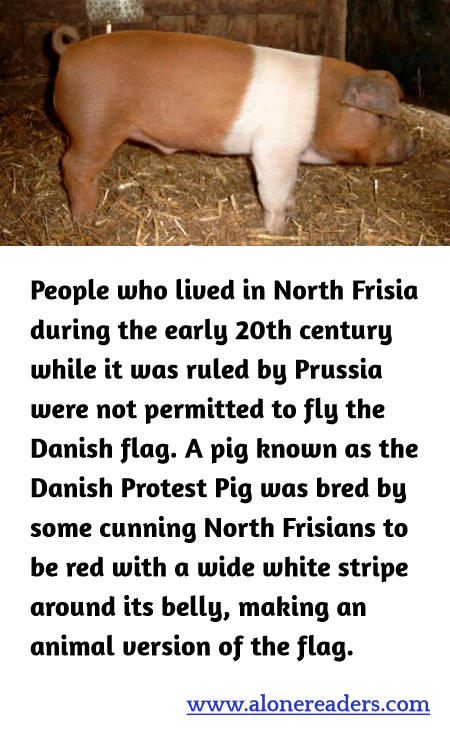
In the early 20th century, the region of North Frisia, then under Prussian rule, was a place where the display of Danish national symbols was prohibited, reflecting the strict policies on nationalistic expressions prevalent in many regions under foreign administration. This ban included the flying of the Danish flag, a symbol of pride and resistance among the local Danish minority. In response to this repression, the residents of North Frisia found a creative and subversive way to express their national identity and dissent.
The Danish Protest Pig, also known as the Husum Red Pied pig, became a symbol of subtle resistance against Prussian rule. These pigs were specifically bred to resemble the Danish flag. They were red with a wide white horizontal stripe around their belly, thus mirroring the colors and design of the flag. The resemblance was uncanny and intentional, serving as a living representation of the flag that the citizens were forbidden from displaying.
This act of breeding the Danish Protest Pig highlighted the ingenuity and resilience of the North Frisians. It allowed them to showcase their cultural affiliation and solidarity with Denmark, in a manner that circumvented the existing prohibitions. While the Prussian authorities imposed strict rules, they had not anticipated that the local populace would use livestock as a form of protest.
The Danish Protest Pig thus became more than just an animal bred for agricultural purposes; it was a poignant symbol of resistance and a clever mechanism of cultural expression. It showed how cultural identity and political resistance can manifest in unexpected forms, turning everyday agriculture into a statement of defiance. These pigs were not only valuable as livestock but were cherished as a unique part of North Frisian heritage, embodying the spirit of a people united in silent protest against an oppressive rule. Through this creative form of resistance, the North Frisians maintained a sense of identity and pride, asserting their connection to Denmark despite the constraints imposed by their rulers.
