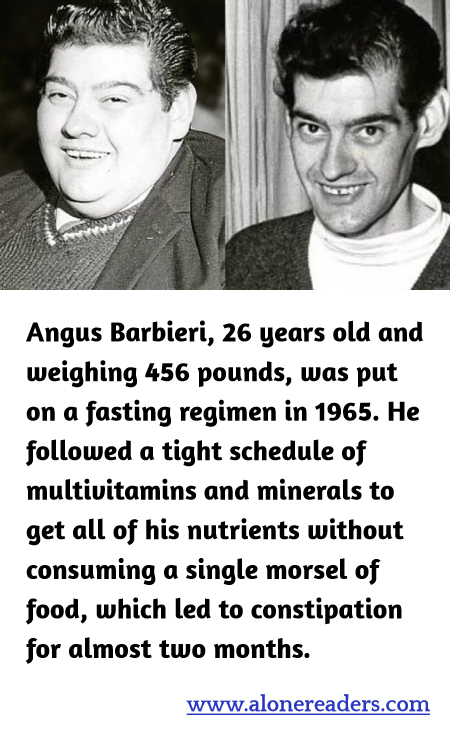
In 1965, Angus Barbieri, a 26-year-old Scotsman weighing 456 pounds, embarked on a remarkable journey that would test the limits of human will and physical endurance. Under medical supervision, Barbieri started a fasting regimen that was initially intended to last a short period but extended into an extraordinary 382 days. Throughout this time, he consumed neither solid nor liquid calories, relying solely on multivitamins, minerals, yeast, and non-caloric fluids to sustain his body.
Barbieri's fasting regimen notably included a strict schedule where he consumed only the bare essentials needed to maintain vital functions without eating actual food. This approach was carefully calibrated to prevent malnutrition and support his body's needs in unprecedented conditions. He was closely monitored by a team of physicians who regularly checked his blood sugar levels, ketone bodies, and general wellness to ensure no harmful effects occurred.
The absence of solid food for such an extended period did lead to severe constipation, which lasted nearly two months. This is a common side effect when the digestive system becomes inactive due to lack of fibrous material needed to stimulate bowel movements. However, medical teams were able to manage this aspect with minimal intervention, allowing Barbieri to continue his fast without significant discomfort.
Barbieri's fasting achievement is not only notable for its duration but also for its impact on his body weight and health. He lost approximately 276 pounds, significantly reducing his body weight from 456 to 180 pounds. More remarkable, however, was his ability to maintain a significant portion of this weight loss for many years, a rare feat in the realm of aggressive weight loss methods.
This extreme case of prolonged fasting underscores the complex interplay between metabolic processes and the human body's adaptability to extreme conditions. It also raises important questions about the boundaries of medically supervised fasts and the potential implications for treating obesity. While Barbieri's story is an exceptional example of what is possible, it is crucial to remember that such extreme measures should only be undertaken under strict medical supervision to guard against potential health risks and nutritional deficiencies.
