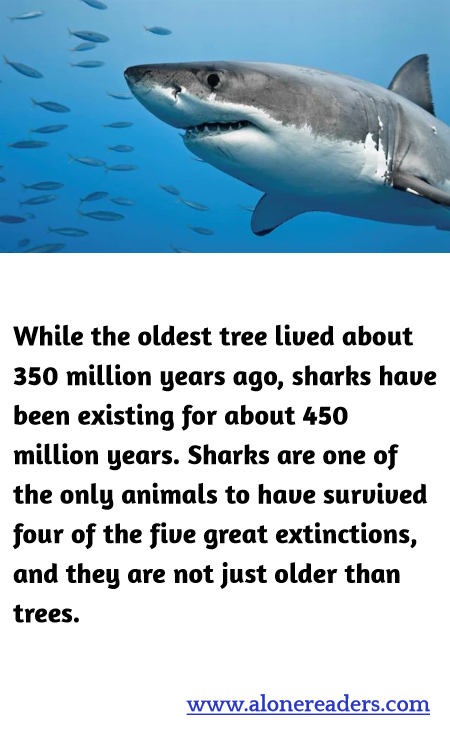
Sharks have been gliding through our oceans for approximately 450 million years, making them older than even the earliest trees that took root around 350 million years ago. This remarkable longevity means that sharks have been silent witnesses to nearly every significant event in Earth’s evolutionary narrative, surviving through conditions that wiped out countless other species.
Their age places them among the most ancient creatures on our planet. Sharks have seen the rise and fall of the dinosaurs, observed the spread of flowering plants, and experienced the splitting of continents. Surprisingly, these predators have remained largely unchanged over the millions of years, their basic body plan proving so effective that it has required little alteration.
Sharks' resilience can be attributed to a combination of biological and ecological factors. They possess a unique skeleton made entirely of cartilage, which is lighter and more flexible than bone. This adaptation helps to make them incredibly efficient swimmers. Their ability to adapt to different marine environments, and a diverse range of dietary preferences, has enabled them to persist through periods of drastic environmental change.
Their survival success is especially evident as they have endured four of the five great mass extinctions the Earth has faced. Each of these catastrophic events radically altered life on Earth, yet sharks have persisted, thanks in part to their widespread distribution throughout the world's oceans and their varied diet which allows them to exploit many ecological niches.
Today, sharks are an essential part of marine ecosystems. As apex predators, they help maintain the balance of marine life by regulating the population of species below them in the food chain, thereby ensuring healthy ocean environments. However, despite surviving natural cataclysms over millions of years, sharks are now facing perhaps their most daunting challenge yet: the threat from human activities such as overfishing, habitat destruction, and the effects of climate change.
The enduring presence of sharks throughout the history testifies to their incredible adaptability and resilience. Yet, it also serves as a stark reminder of the precarious position even the most ancient survivors occupy in the face of man-made environmental impacts. Protecting these ancient mariners is no longer just about preserving a charismatic predator but about maintaining the health of entire ocean ecosystems on which humans also rely.
