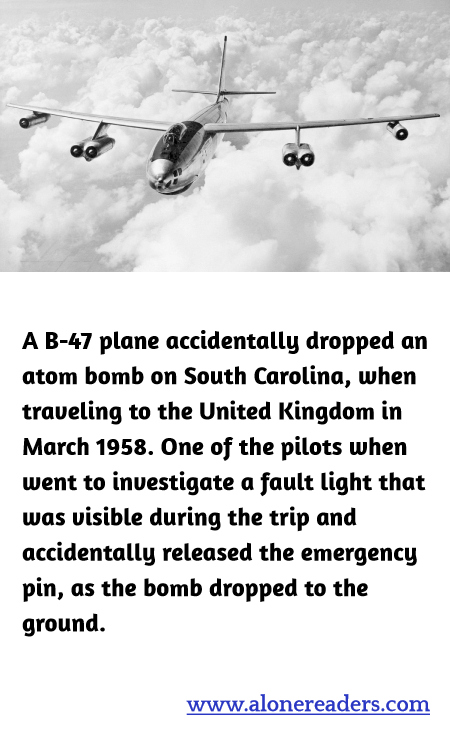
In a startling incident on March 11, 1958, a B-47 Stratojet from the United States Air Force accidentally released an atomic bomb over Mars Bluff, South Carolina. This incident, fortunately, did not result in a nuclear explosion, but it caused significant conventional damage and inflicted several injuries, highlighting the potential dangers associated with handling nuclear weapons.
The aircraft was en route to the United Kingdom for a mission during the Cold War. The crew onboard included Captain Earl Koehler, who was alerted to a fault light in the cockpit. This light indicated a problem with the locking mechanism of the nuclear weapon that the bomber was carrying. While attempting to address this issue, Captain Bruce Kulka, who was navigating the weapon controls, accidentally pulled the emergency release pin. Unbeknownst to them, this action triggered the release mechanism of the Mark 6 atomic bomb they carried.
The bomb plummeted to the earth, landing in a rural area near Florence, South Carolina. Although the bomb's nuclear core was not installed (a safety precaution during peacetime transport), the high explosives surrounding the core detonated upon impact. This explosion created a massive crater approximately 75 feet wide and 35 feet deep, obliterating a local playhouse and damaging nearby residences. The explosion also resulted in minor injuries to several members of the Gregg family, whose property took the brunt of the blast.
The incident quickly became a significant embarrassment for the Air Force, raising public concerns about the safety protocols associated with transporting nuclear weapons. The Air Force was criticized for its handling of the situation and the lack of quick, clear communication with the affected civilians and local authorities. In the aftermath, the U.S. military took several measures to enhance the safety of nuclear weapons transport, improving handling procedures and reinforcing the training given to crews carrying such dangerous cargos.
The Mars Bluff incident remains a chilling reminder of the risks inherent in the custody and transport of nuclear weapons. It serves as a cautionary tale about the potential human errors that can lead to catastrophic accidents, even when actual nuclear detonation is avoided. This event is one of several "Broken Arrow" incidents in which the United States military lost possession or accidentally dropped nuclear bombs without a subsequent nuclear explosion.
