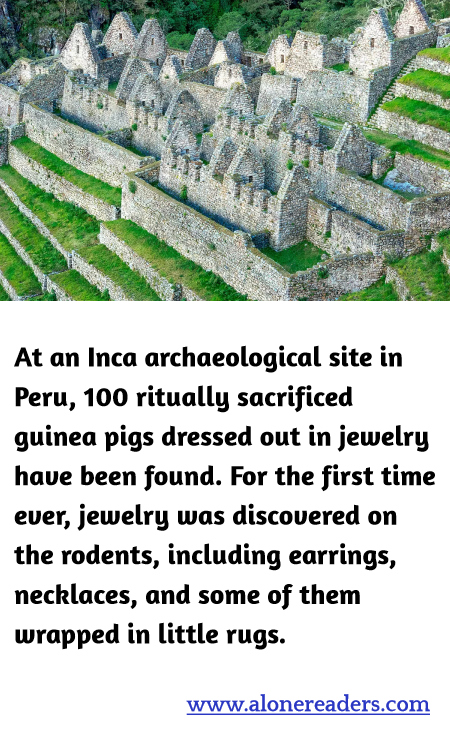
The discovery of 100 ritually sacrificed guinea pigs adorned with jewelry at an Incan archaeological site in Peru has provided an unprecedented insight into the cultural practices of the Inca civilization. This remarkable find, which included guinea pigs decked out in earrings and necklaces, and even some wrapped delicately in small rugs, marks the first time that such adornments have been found on sacrificial offerings of this type.
Traditionally, guinea pigs have held significant roles in the social and religious realms of Andean societies. They were often used in healing rituals and as offerings to deities. However, the addition of jewelry and careful wrapping suggests a deeper, possibly more personal involvement and a higher level of ritual significance than previously understood. This discovery could indicate that the guinea pigs were not only offerings but also represented symbols of wealth and status, or perhaps were intended as messengers to the gods, adorned in their finest to carry the prayers of the people.
Located at an Incan site known for its well-preserved ruins and artifacts, this find adds a new layer to our understanding of Incan religious practices and their relationship with animals. The fact that these animals were buried so meticulously, and with such elaborate accoutrements, hints at the complexity of Incan belief systems and the role of animals within these ideologies.
The discovery also raises interesting questions about the craftsmanship and cultural expressions of the Inca. The jewelry found on the guinea pigs was not merely functional but decorative, suggesting an advanced level of artistic development and understanding of materials. The use of small rugs for wrapping the guinea pigs further reflects a sophisticated textile industry.
Moreover, the site offers invaluable data for archaeologists and historians, allowing for a deeper exploration into the religious and societal values of the Incas. It provides a clearer picture of the interplay between their ceremonial life and their everyday social structures.
This discovery not only highlights the significance of guinea pigs within Incan culture but also opens up new avenues for research into the rituals and religious life of one of South America’s most intricate civilizations. As investigations continue, each artifact will help piece together the vast, intricate puzzle of the Inca Empire, revealing the nuances of a civilization that continues to fascinate and intrigue.
