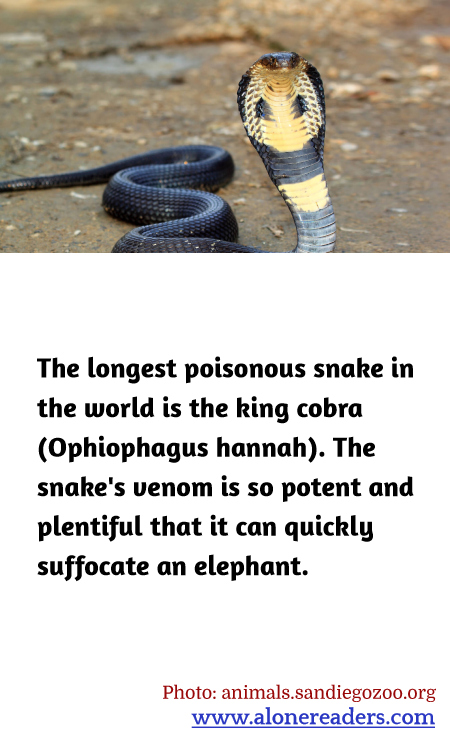
The king cobra, scientifically named Ophiophagus hannah, holds the title of the longest venomous snake in the world. Indigenous to the forests of South and Southeast Asia, this formidable serpent can reach up to 18 feet in length, although the average size is generally closer to 12 to 13 feet. The king cobra's distinctiveness does not end with its size; it is also notorious for its highly potent venom, which it uses to subdue its prey.
The venom of the king cobra is primarily neurotoxic, affecting the victim's central nervous system, which leads to severe pain, blurred vision, vertigo, drowsiness, and paralysis. If untreated, the venom can cause respiratory failure and death. The amount of neurotoxins that a king cobra can deliver in a single bite is enough to kill 20 people, or even an elephant. Despite their fearsome reputation, king cobras are shy and avoid humans when possible. They are also considered intelligent snakes, demonstrating a higher level of awareness and analytical thinking than most other snakes.
King cobras primarily feed on other serpents, including smaller pythons and even other venomous snakes. This unique dietary habit is reflected in its genus name "Ophiophagus," which translates to "snake-eater." Their role as apex predators in their ecosystem helps control the populations of other snakes, which could otherwise become pests.
The conservation status of the king cobra is currently listed as vulnerable. Habitat destruction and the illegal pet trade pose significant threats to their populations. Protective measures are essential to ensure that these majestic snakes continue to thrive in their natural habitats. Their presence in the wild is crucial, not just for the ecological balance but also for the biodiversity they help maintain in their ecological niche. Efforts towards their conservation include establishing protected areas, enforcing laws against illegal trading, and promoting awareness about their importance and status. Through these measures, the survival of the world's longest venomous snake may be safeguarded for future generations to marvel at and study.
