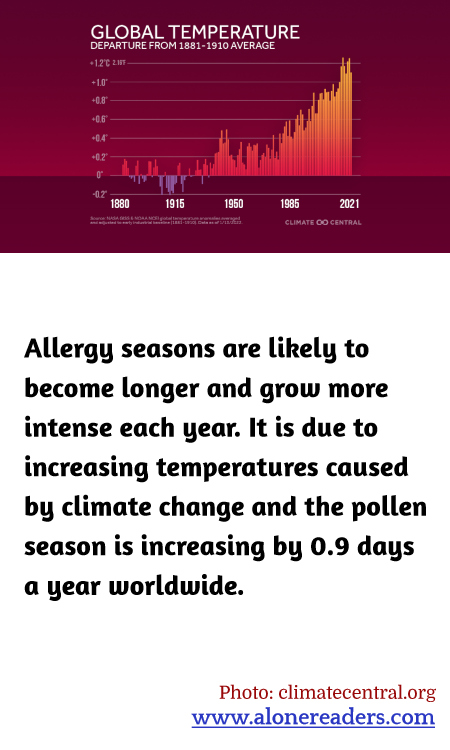
Climate change is not just a distant threat to polar ice caps and coastal cities; it is also affecting the lives of millions who suffer from seasonal allergies. Due to rising global temperatures, allergy seasons are becoming longer and increasingly severe. Every year, the pollen season extends by an average of 0.9 days across the globe, a trend that not only prolongs the discomfort of allergy sufferers but also potentially increases the number of people who develop allergies.
As the planet warms, plants are responding by producing pollen earlier in the year and continuing later into the season. This extended period of pollen production means more days of sneezing, runny noses, itchy eyes, and other bothersome symptoms for those sensitive to pollen. Moreover, the higher temperatures and increased CO2 levels also boost the production of allergenic pollen. This makes the pollen itself more potent, which can trigger stronger allergic reactions.
The increasing intensity and duration of allergy seasons can strain public health systems as more people seek relief from their symptoms. Over-the-counter allergy medications, doctor visits, and even hospitalizations for severe reactions may increase, applying pressure on healthcare providers and affecting the economy. Additionally, the quality of life of individuals with severe allergies may significantly decline as they may find it increasingly difficult to manage symptoms that are both more severe and prolonged.
Furthermore, the ramifications of a longer allergy season extend beyond human health. For example, agricultural sectors may also face challenges as changes in pollen production can affect the pollination of crops, potentially disrupting local and global food supplies. Wild ecosystems might also be impacted, with shifts in plant phenology potentially altering habitats and the species that depend on them.
Adapting to these changes requires a multifaceted approach. Public awareness and education about the implications of climate change on health, particularly for vulnerable groups such as children, the elderly, and those with preexisting respiratory conditions, are crucial. Additionally, improved forecasting of pollen levels and better distribution of information can help those afflicted to better manage their exposure and symptoms. On a broader scale, addressing the root causes of climate change remains a critical element in mitigating these extended allergy seasons, highlighting yet another reason for global efforts to reduce carbon emissions and enhance sustainability practices.
