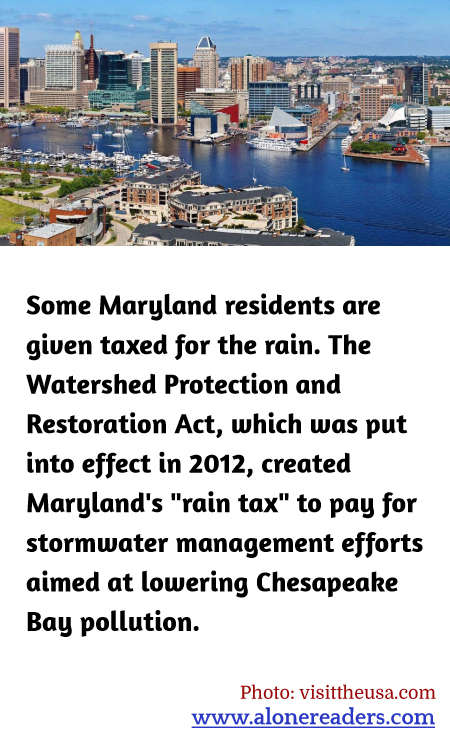
In an unusual approach to environmental conservation, some Maryland residents face a tax that is directly linked to rainfall. This initiative, known as the "rain tax," officially referred to as the Watershed Protection and Restoration Act, was instituted in 2012. The primary goal of this legislation is to fund projects that manage and mitigate stormwater runoff, one of the major pollutants of the Chesapeake Bay.
The logic behind the tax is rooted in environmental protection. Stormwater runoff occurs when rain falls on roads, rooftops, and other impervious surfaces, collecting pollutants such as oil, pesticides, sediments, and other contaminants along the way. This polluted runoff eventually makes its way into natural water bodies, including the Chesapeake Bay, adversely affecting the water quality and the aquatic life therein. To counter this, the rain tax financially supports the implementation of systems that can intercept, treat, or direct this runoff more effectively, ultimately reducing the volume of pollutants entering the bay.
The tax is calculated based on the amount of impervious surfaces a property contains—meaning surfaces like driveways, parking lots, and rooftops that do not absorb rainwater. Property owners with more impervious surface area pay a higher tax because they contribute more to runoff and pollutant loading. Revenue generated from this tax is utilized to construct and maintain a variety of stormwater management infrastructures such as retention ponds, permeable pavements, and green roofs.
Despite its environmental benefits, the rain tax has been a contentious issue among Maryland residents. Critics argue that the tax places an unfair financial burden on property owners and can be seen as an overreach of government regulation. Meanwhile, supporters insist on the necessity of the tax, pointing out that the health of the Chesapeake Bay and its surrounding ecosystems is crucial not just for wildlife, but also for the tourism and seafood industries vital to the region's economy.
The rain tax serves as a proactive measure to address the longstanding issue of water pollution in Chesapeake Bay. Whether liked or loathed, it underscores the broader recognition of the need for sustainable environmental practices. By addressing the source of stormwater runoff, Maryland not only protects its natural heritage but also sets a precedent for other states dealing with similar environmental challenges.
