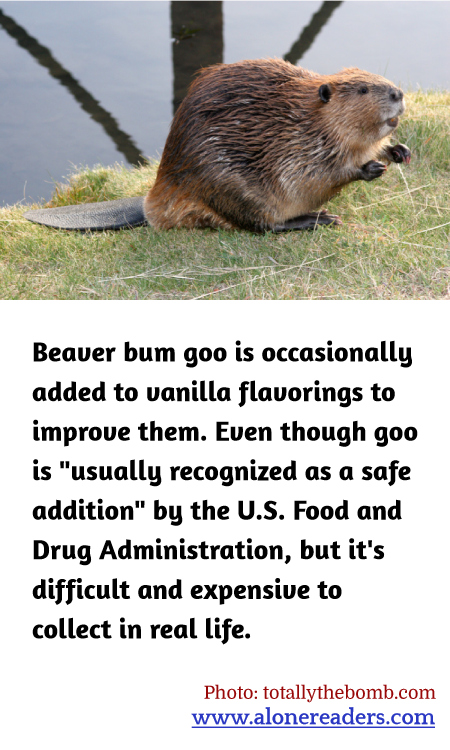
In the world of flavorings and additives, one of the most interesting and perhaps surprising ingredients used is castoreum, a substance derived from the anal secretions of beavers. Commonly referred to as "beaver bum goo," this natural product has been used for its vanilla scent and flavor. However, the inclusion of castoreum in food products is much less common today due to its labor-intensive collection process and the ethical concerns it raises.
Castoreum is extracted from the glandular secretions of beavers, typically located between the pelvis and the base of the tail. Historically, this goo was not only prized for its ability to enhance vanilla aromatics but also for its uses in perfumes and traditional medicines. The secretion carries a musky and fruity smell, which, when diluted, provides a scent similar to natural vanilla.
Despite being recognized as a safe additive by the U.S. Food and Drug Administration, the use of castoreum in food production has markedly decreased. The reasons are twofold: the difficulty in collecting the substance and the shifting consumer preferences towards more ethically sourced and natural ingredients. Collection of castoreum is not only time-consuming but also requires the expertise of trained professionals who can extract the product while ensuring the animals are not harmed, making it an expensive endeavor.
Furthermore, consumer advocacy for transparency in food labeling has risen in recent decades. People today are more interested than ever in the origins of their food, choosing items with easily recognizable and understandable ingredients. The idea of using an additive from animal secretions is less appealing to many, particularly within communities that prioritize vegan or cruelty-free products.
As a result, vanilla flavoring has leaned heavily on synthetic options or on cultivating more natural vanilla despite its high cost. Vanilla beans are labor-intensive to grow and require a significant amount of hand pollination and care. However, they remain a highly sought after commodity in the global spice market, prized for their unmistakable flavor and aroma.
In conclusion, while castoreum might be an interesting footnote in the history of flavorings, its practical use in modern food industries is limited by logistical, ethical, and economical factors. As consumers continue to advocate for transparency and ethical responsibility, the demand for natural and synthetic vanilla will likely continue to rise, leaving castoreum to be remembered more as a curiosity rather than a staple in food production.
