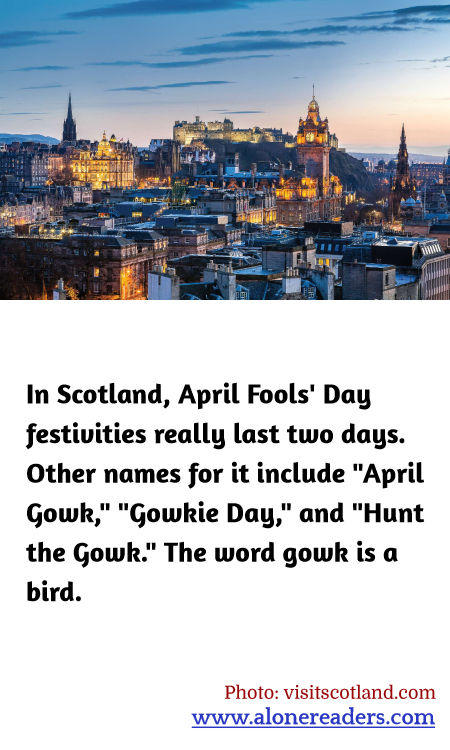
In Scotland, April Fools' Day traditions extend beyond just the first of April, encapsulating a two-day festival of humor and hoaxes. Known locally under various names such as "April Gowk," "Gowkie Day," or "Hunt the Gowk," this celebration takes a uniquely Scottish twist that adds depth to the historical practice of trickery associated with April Fools' Day. "Gowk" refers to the cuckoo bird, a symbol of foolishness in Scottish folklore, which is befitting for a time dedicated to playful deception.
The first day, April 1st, operates much like April Fools' Day in other parts of the world where people play pranks and jokes on each other until noon. Those who continue the jests past this unofficial cut-off time are often branded "April fools" themselves. However, in Scotland, the fun doesn’t stop there. The second day of foolery, known as "Taily Day," involves pranks that specifically target the posterior part of the body. One of the most famous pranks includes the "kick me" sign, a jest that has spread far and wide beyond Scottish borders but is believed to have originated there.
"Hunt the Gowk" sees participants sending their friends on fool’s errands, looking for things that don't exist or conveying cryptic or nonsensical messages to others, leading the recipient on a wild goose chase. The term “gowk” implies misdirection or being sent on a fool’s errand, akin to wild cuckoos known for laying their eggs in the nests of other birds.
This two-day affair highlights the Scottish love for laughter and their cultural heritage in embracing the absurd and surreal with good humor. These festivities serve not only as a means for communal bonding but also demonstrate the ingenuity and creativity in Scottish humor. As the rest of the world returns to business as usual on April 2nd, Scots continue reveling in mirth and mischief, preserving a tradition that has been part of their cultural tapestry for centuries.
