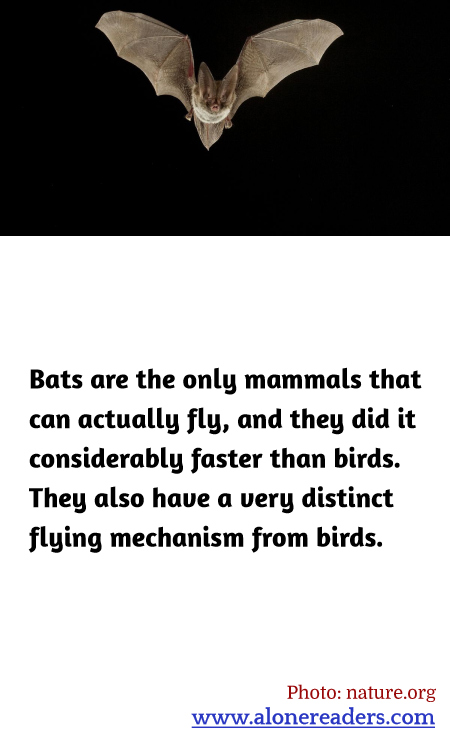
Bats hold the unique distinction of being the only mammals capable of sustained flight, a trait that differentiates them fundamentally from other flying mammals like flying squirrels, which can only glide for limited distances. The evolution of flight in bats is particularly remarkable as it appears they took to the skies much earlier and perhaps even more swiftly than birds, based on fossil records and genetic studies.
The mechanics of bat flight is also quite distinct from that of birds. Unlike birds whose wings are essentially modified arms with feathers, a bat's wings are made up of thin, stretchy skin or membrane that extends between their elongated fingers and their body. This skin membrane also encompasses their legs and tail, forming a structure that is significantly more flexible than the rigid wings of birds. This flexibility allows bats to maneuver with more precision than birds, enabling sudden sharp turns and agile changes in direction which are crucial in navigating and hunting within the confines of dark caves or cluttered forest areas.
Moreover, this unique wing structure of bats not only assists them in acrobatics and hunting but also contributes to their role in pollination and seed dispersal, which is vital for the reproduction of many tropical and subtropical plants. The flexibility and dexterity of bat wings allow them to hover and extract nectar from flowers, similar to hummingbirds, thereby aiding in pollination.
Further adding to their aerial abilities, bats have a highly sophisticated echolocation system, which allows them to navigate in complete darkness. They emit ultrasonic calls out into their environment and listen to the echoes of these calls that return from various objects near them. The precision of this echolocation is so refined that bats can detect objects as fine as a human hair in complete darkness.
Given their nocturnal habits, bats' mastery of the air during the night is unparalleled in the animal kingdom. This combination of advanced flight mechanisms not only highlights the evolutionary success of bats but also underscores the incredible diversity of mammalian adaptations. The study of bat flight not only expands our understanding of mammalian biology but also inspires advancements in technology, particularly in the fields of robotics and aerospace, where the unique principles of bat flight are studied for applications in drone technology and other areas where maneuverability and efficiency are crucial.
