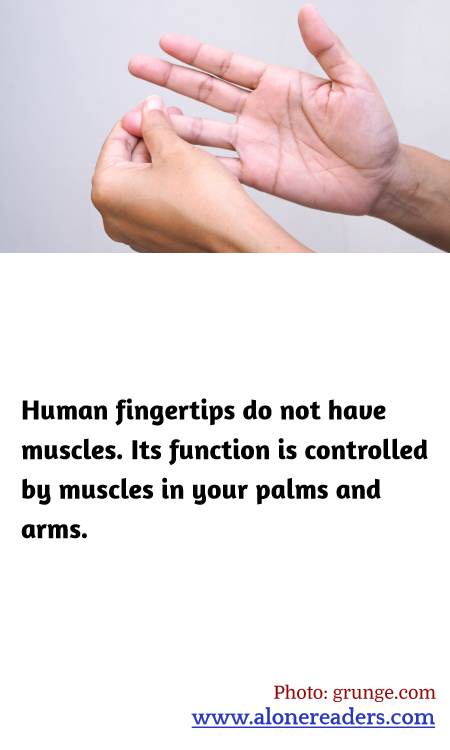
Human fingertips are unique in their structure and function, playing a crucial role in our sense of touch and our ability to manipulate objects. Interestingly, despite their significance in our daily actions, the fingertips themselves contain no muscles. Instead, they are controlled by muscles located in the palms and arms.
The absence of muscles in the fingertips is due to their anatomical design, which is optimized for sensitivity and dexterity rather than force. The tips of our fingers are equipped with dense concentrations of nerve endings, making them highly sensitive to touch, temperature, and pressure. This sensitivity allows for the detailed perception required to perform complex tasks that require precise manipulation, such as typing, playing a musical instrument, or feeling the texture of an object.
The control of the fingertips is handled by extrinsic and intrinsic muscles in the hands and forearms. The extrinsic muscles, located in the forearm, are primarily responsible for the gross movements of the fingers. These muscles extend and flex the fingers through long tendons that run from the forearm across the wrist and into the hands and fingers. These tendons are connected to each fingertip, allowing controlled movements that are essential for grip and manipulation.
The intrinsic muscles, which are found within the hand and not the fingers, perform finer, more precise movements. These muscles help to control the position of the fingers for tasks that require fine motor skills, adjusting the fingers’ spread and ensuring precision grip.
This unique muscular arrangement allows the fingertips to remain highly adaptable and sensitive, crucial for enhancing the sense of touch. The ability to manipulate objects with great precision is fundamental not only for everyday tasks but also for specific professional and creative activities that require fine motor control.
The absence of muscles in the fingertips also means reduced bulk in the fingertips, increasing their tactile sensitivity. Each finger can move independently or in coordination, thanks to the sophisticated control provided by the muscles in the palms and forearms, facilitated by the nervous system, which coordinates all activities.
Understanding these dynamics offers insight into the fascinating complexity of human anatomy and its adaptation to meet specific functional needs. The design not only allows for the complex range of motion and the exquisite control we see in human hands but also highlights the efficiency of evolutionary adaptations in human physiology.
