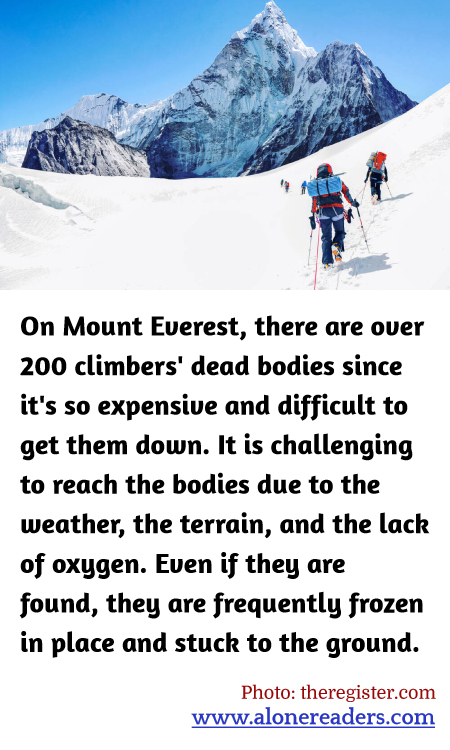
Mount Everest, standing at a height of over 29,000 feet, is not only a symbol of ultimate adventure but also a site bearing stark reminders of the perilous nature of such an audacious endeavor. The mountain is dotted with the remnants of over 200 climbers who lost their lives braving its treacherous climbs. These bodies serve as a grim marker of the perils that lie in attempting to conquer the world’s highest peak.
The primary reason why these bodies remain on the mountain is the sheer difficulty and cost associated with retrieving them. The conditions at such high altitudes are extreme, with sub-zero temperatures and unpredictable weather patterns. The terrain is unforgiving, comprising icy slopes and treacherous crevices. At such elevations, the oxygen level is a mere third of what is available at sea level, complicating any recovery efforts.
Most of these bodies are embedded into the icy landscape, literally frozen in place, making the recovery efforts not only dangerous but also nearly impossible. The effort to retrieve a body from the high altitudes of Everest can be as perilous as the initial climb, requiring an extensively resourced expedition. Such operations can cost tens of thousands of dollars and put the lives of the recovery team members at significant risk.
In many cases, the bodies of fallen climbers have become landmarks or waypoints for other climbers ascending the mountain. This macabre aspect of the climb is a sobering reminder of the risks involved. Families of the deceased are often left with the difficult decision of leaving their loved ones on the mountain, as they weigh the hazardous and costly retrieval against the peace that may come from recovery.
The existence of the bodies on Everest is a poignant reminder of the mountain’s power and the respect it commands. For many climbers and their families, the hope is that those who perished did so engaging in a pursuit they loved, amidst the incredible beauty and challenge that Everest represents. Yet, it underscores the necessity for meticulous preparation, respect for the natural elements, and an unwavering commitment to safety in the face of monumental challenges.
