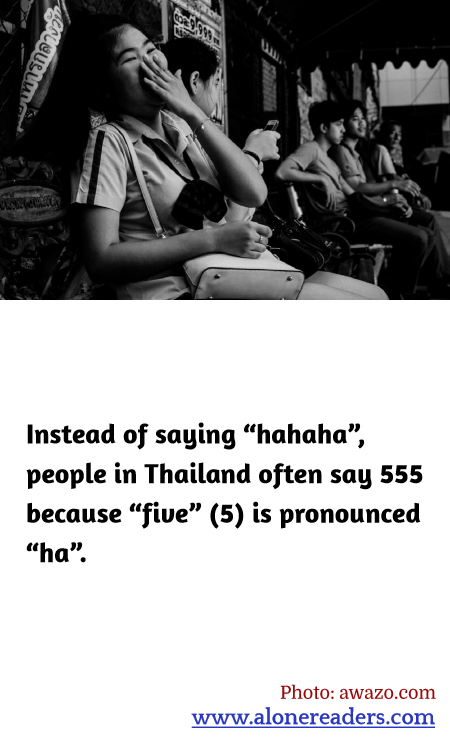
In the diverse landscape of global communication, even laughter takes different forms. One particularly intriguing example is how people in Thailand express laughter in written conversations, such as texts or online chats. Instead of using the familiar "hahaha" to indicate amusement, Thai people often type "555". This numeric expression stems from the Thai pronunciation of the number five, which is "ha". As a result, a string of fives serves the same purpose as a string of "ha"s does in other languages, denoting laughter or mirth.
The use of numbers to represent words or sounds can be seen in various languages and cultures, often referred to as numerical homophones. These are especially popular in the digital age, where shorter, quicker forms of communication are often more desirable. In the case of Thai, "555" is not just a faster way to type laughter, it also adds a cultural uniqueness that distinguishes Thai internet slang from that of other languages.
This practice reflects the broader, universal human tendency to play with language and adapt it to new technological contexts. Just as emojis and GIFs have become a global method for expressing emotions without words, numerical and letter-based expressions like "555" for laughter in Thai, or "lol" (laugh out loud) in English, are ways to bridge language and digital communication methods. It's a fascinating example of how language evolves and adapts in response to changes in how we communicate with each other, reflecting both cultural specificity and universal human behaviors.
