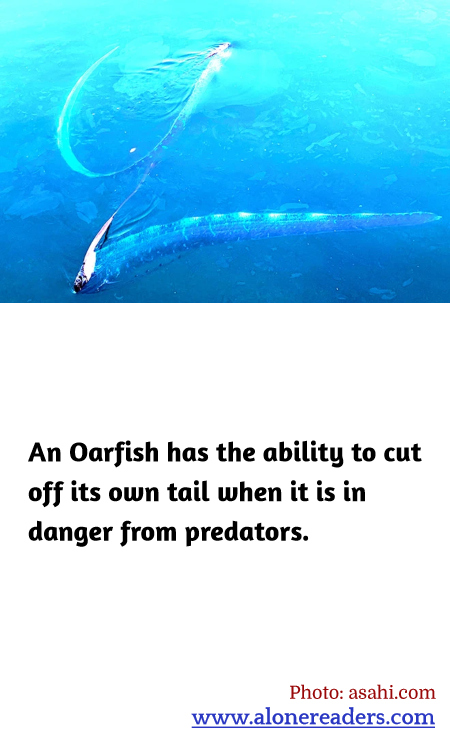
The oarfish, a deep-sea creature often shrouded in mystery and intrigue, possesses a rather unique defense mechanism—notably, its ability to sever its own tail when faced with threats. Resembling a slender ribbon, the oarfish can grow to an astonishing length, with some recorded at over 26 feet long. This impressive size, however, does not deter predators from targeting them. In response, oarfish have evolved a remarkable survival tactic.
When threatened, the oarfish can effectively "amputate" its own tail to create a diversion, allowing it to escape from predators while the detached portion continues to wriggle, drawing the attention of the attacker. This biological phenomenon, known as autotomy, is a capability shared with other marine animals, such as certain species of sharks and lizards, which can also drop parts of their bodies to evade death. For oarfish, this drastic measure is a testament to their incredible adaptation to the harsh environment of the deep sea.
The self-amputation process does not fatally harm the oarfish; it retains the ability to regrow the lost part, although often not to its original grandeur. This ability is crucial for the oarfish’s survival not just from predatory attacks but also from its harsh and competitive habitat, where food can be scarce and survival is constantly at risk.
Moreover, the sight of an oarfish, especially ones close to the surface or washed up ashore, has historically incited fear and superstition. Their peculiar appearance and rare sightings have sparked legends and myths about sea serpents and other mythical creatures. Nonetheless, despite their mystique and the dramatic nature of their survival strategies, oarfish continue to be a subject of intense scientific study. Researchers are particularly interested in learning more about their behavior, breeding habits, and ecological role, hoping to uncover more secrets about these fascinating yet elusive sea creatures.
