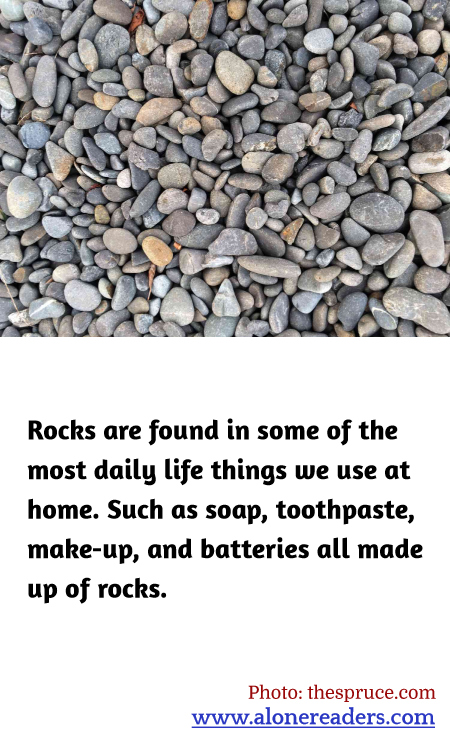
Rocks, seemingly mundane and unremarkable, actually play a crucial role in many aspects of daily life, especially in household items that we frequently use. The influence of rocks extends far beyond their decorative or construction uses, infiltrating into various everyday products such as soap, toothpaste, makeup, and batteries.
Starting with soap, one of the primary components is talc, a mineral rock that is ground into a fine powder. Talc is known for its ability to absorb moisture and reduce friction, which is why it is often used to provide the smooth, silky feel in soaps. It also aids in the soap's ability to form suds, enhancing its cleaning power.
Toothpaste often includes another type of rock known as calcium carbonate. This rock acts as a mild abrasive which helps in removing plaque and other debris from the teeth, contributing to toothpaste's effectiveness in cleaning and polishing teeth. Sometimes, even baking soda, derived from the mineral natron, is used for its gentle abrasive qualities and its ability to neutralize acids responsible for tooth decay.
In the realm of cosmetics, rocks contribute significantly to product formulations. Mica, a group of sheet silicate minerals, is extensively used in makeup products such as eyeshadows, powders, and highlighters due to its shimmering properties. The minuscule, sparkling flakes of mica reflect light, allowing for a variety of effects from subtle glows to vibrant glitters. Moreover, titanium dioxide, another rock-derived ingredient, is commonly used in makeup for its pigmentation and as a sunscreen agent, protecting the skin from ultraviolet light.
The usage of rocks extends into more technical household items such as batteries. Lithium, a soft, silver-white metal found in rock deposits, is critical in the manufacture of lithium-ion batteries. These batteries power a vast array of modern electronics, from smartphones and laptops to electric vehicles, offering high energy density and long recharge cycles.
Thus, the rocks surrounding us are not just silent sentinels of the earth's crust but active contributors to modern living. By transforming into various forms, they continue to serve essential functions in everyday products, improving comfort, health, and technology. Their ubiquitous nature hides a plethora of uses, turning ordinary rocks into extraordinary agents of daily convenience and technological advancement.
