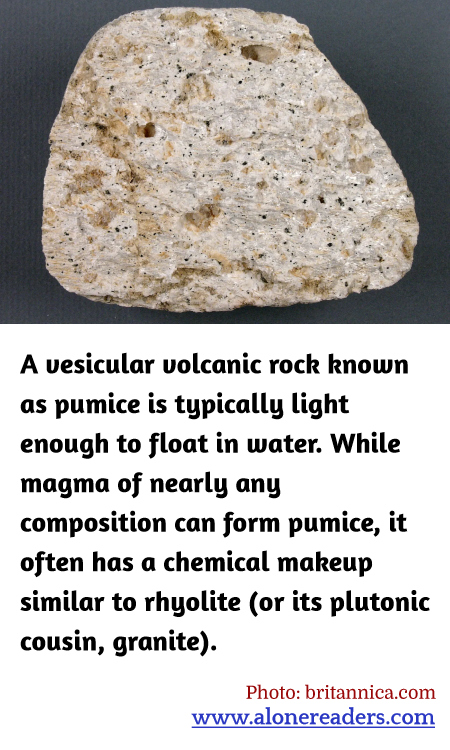
Pumice is a unique type of volcanic rock with an intriguing ability to float on water. This remarkable characteristic is due to its highly vesicular nature, containing numerous tiny air pockets formed during the rapid cooling and depressurization of molten lava.
Though magma from various sources can produce pumice, it primarily comes from compositions akin to rhyolite, or its deeper, coarse-grained equivalent, granite. These compositions are high in silica, a component that increases the viscosity of magma. Pumice’s formation entails explosive volcanic activity, where the high viscosity of the magma hinders the easy escape of volcanic gases. As the magma ascends and the pressure diminishes, the gases dissolved within supercharge and expand, creating a foam-like structure in the molten rock. Upon cooling, this frothy texture solidifies into the light, porous stone we know as pumice.
Because pumice is so lightweight and abrasive, it has numerous applications in both industrial and consumer products. It's widely used in construction for lightweight concrete and insulative low-density cinder blocks. The beauty industry appreciates its mild abrasive qualities for exfoliating products and pumice stones that remove dead skin. Additionally, pumice is an essential component in horticulture to aerate soil mixtures, promoting root growth and moisture retention in plants.
Beyond its practical uses, pumice also plays a role in the ecosystem of water bodies. When large quantities are deposited into water following volcanic eruptions, these rocks can drift on ocean currents, sometimes carrying organisms to new locations and creating floating ecosystems. This phenomenon aids in the dispersal of various marine species and contributes to the biodiversity of ecosystems.
In essence, pumice is not only a cornerstone in various industries due to its unique properties, but it also participates actively in the natural processes of our planet, making it a material of interest not only to scientists and industrialists but also to the general public seeking natural solutions in everyday products.
