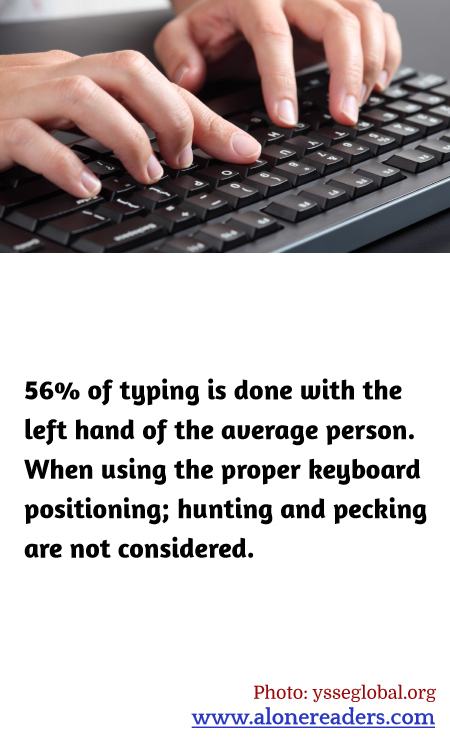
Typing, an essential skill in today's digital world, unveils some surprising statistics about how we use our hands to communicate through keyboards. Interestingly, 56% of keyboard typing is executed using the left hand if traditional proper keyboard positioning—known as the QWERTY layout—is employed. This figure emphasizes the uneven distribution of letter placement and workload between the left and the right hands.
The QWERTY keyboard layout, named after the first six letters in the top row, was designed in the 1870s primarily to prevent jamming in typewriters by spacing out commonly used letter combinations. As a result, the layout inadvertently places more typing demand on the left hand. For example, the left hand covers more high-frequency keys such as 'E', 'T', 'A', and 'R', which are crucial for constructing a vast array of English words. Such a setup contrasts starkly with the right hand, which tends to reach for punctuation, less frequent letters, and operational keys like Enter and Shift.
What is also interesting about typing dynamics is that the proficient use of both hands doesn't involve what's commonly referred to as 'hunting and pecking.' This method, where a person uses only one or two fingers to type, is much less efficient and significantly slower than the touch typing technique. Touch typing involves memorizing the keyboard layout and using all fingers, which allows for faster, more accurate typing without constantly looking at the keyboard.
When typing properly with all ten fingers, the positional asymmetry in letter frequency necessitates a higher dexterity and agility in the left hand. This is one reason why learning to type can feel awkward in the initial stages, especially for right-handed individuals who might find their non-dominant hand lagging in speed and accuracy.
The predominance of left-hand typing in the standard keyboard layout indeed influences how typing skills are taught and refined. Educational programs and typing software often include exercises that focus on strengthening both hands but may stress more intensive practice with the left hand to balance proficiency on both sides of the keyboard.
In conclusion, the fact that 56% of typing is performed with the left hand underscores a unique aspect of keyboard design and its ergonomic implications. Knowing this can encourage a more balanced approach to typing education and potentially inform the development of more intuitive keyboard layouts in the future. As technology continues to dominate communication channels, understanding and improving how we interact with our tools is vital for efficiency and comfort.
