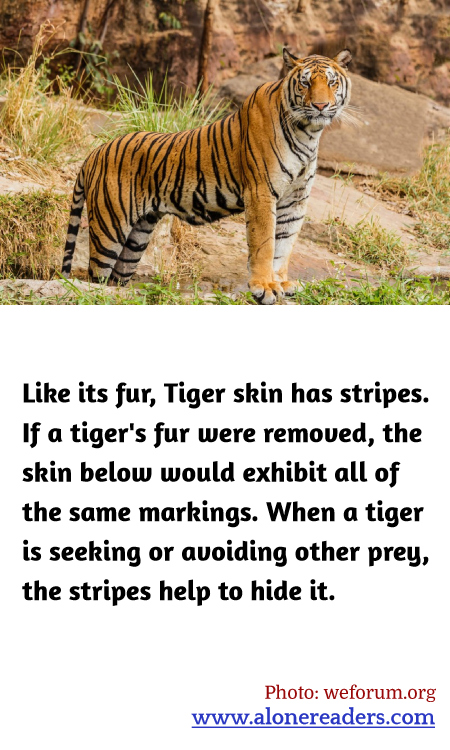
Tigers are one of the most majestic creatures in the animal kingdom, known for their powerful build and striking striped pattern. Interestingly, these iconic stripes are not just superficial fur patterns but are also present on their skin. If a tiger's fur were completely removed, the skin beneath would display the same intricate pattern of stripes. This unique feature is more than just aesthetic; it plays a crucial role in their survival.
The stripes on a tiger's skin serve as camouflage, blending into the natural environments of forests, grasslands, and other habitats where tigers are found. The patterns break up the outline of the tiger's body, making it difficult for both prey and predators to detect. Each tiger's stripes are unique, varying in pattern, width, and coloration, much like human fingerprints. These variations are determined by genetics and the specific subspecies of the tiger, such as the Siberian or Bengal tiger.
In terms of evolution, the striped pattern likely developed as an adaptation to their hunting lifestyle. Tigers are primarily solitary hunters, often relying on the element of surprise to catch their prey. The stripes help them remain unseen until they are close enough to strike. It's a masterful adaptation to their often dense and shadowy habitats, allowing them to merge seamlessly with streaks of sunlight and foliage.
Furthermore, the fact that tiger skin is also striped hints at the depth of this adaptive trait. It suggests that the pattern is so fundamental to their survival that it manifests both in their visible fur and on their actual skin—a redundant system to ensure the effectiveness of their camouflage.
Preserving tigers and their habitats is crucial. Not only are tigers a beautiful symbol of wild nature, but they also play a vital role in the biodiversity of their ecosystems. Protecting tigers has implications that extend far beyond just one species. As apex predators, they help maintain the balance of populations lower down the food chain and keep ecosystems healthy. Conservation efforts continue to be imperative to prevent poaching and habitat loss that threaten these magnificent animals with extinction.
In conclusion, the striped pattern of a tiger is a brilliant natural adaptation for survival, intricately woven into their fur and skin. This feature showcases the complexity of evolutionary adaptations and highlights the importance of continued conservation efforts to protect such an iconic species and their environment.
