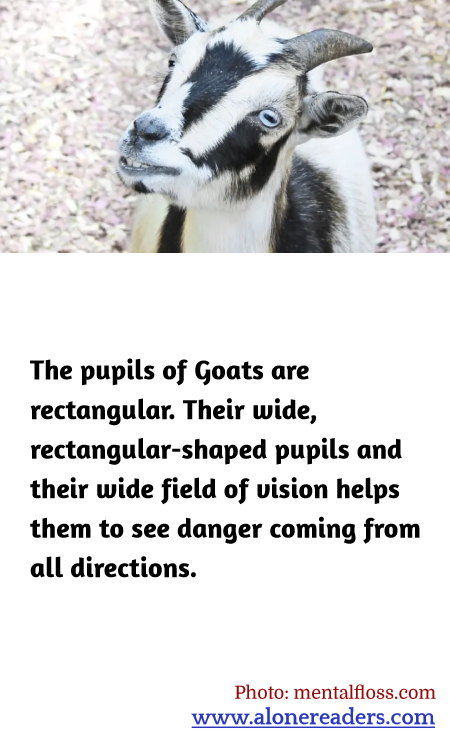
Goats are intriguing creatures not just for their playful behaviors and social nature, but also for their unique eye features, particularly their rectangular pupils. These pupils are not merely an aesthetic trait; they play a crucial role in the goat's survival in the wild. The rectangular shape of their pupils gives goats a very broad field of view, estimated to be between 320 to 340 degrees. This means goats can see virtually all around them without having to move their heads.
This wide field of vision is particularly advantageous for spotting predators. Goats, being prey animals, need to be constantly aware of their surroundings. The horizontal slit of their pupils grants them the ability to scan the environment more effectively. This shape is ideally suited to detecting predators and potential threats from various angles, which comes in handy given the varied terrain goats often inhabit, from rocky cliffs to open fields.
Moreover, the design of goats’ eyes allows them to see well in low light, which is essential during dawn and dusk when predators are most active. The pupils can expand considerably, enabling more light to enter the eye, and thus improving the goat's vision under poor lighting conditions. This capability not only helps them in avoiding predators but also aids in their nocturnal feeding habits.
Another fascinating aspect of goat's rectangular pupils is their ability to rotate. These pupils can rotate by as much as 50 degrees. This rotation keeps their vision parallel to the ground even when they lower their head to graze. This adaptability of their pupils prevents the disorientation that would come from the ground and sky shifting in their field of vision, providing them stability and a constant horizon, which is critical when navigating uneven terrains.
In summary, the rectangular pupils of goats are a remarkable adaptation that supports their vigilant and active lifestyle. From providing a panoramic view to enhancing their ability to perceive motion and light, these distinctive eyes play a key role in their survival and daily activities. Such biological adaptations highlight the intricate relationship between an animal's physical traits and its environment, underscoring the wonders of evolutionary biology.
