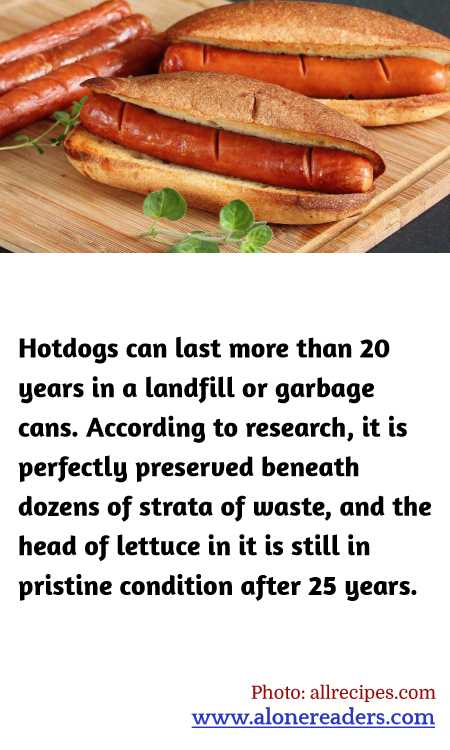
Hotdogs, those quintessential quick and easy meals, have an unexpected record when it comes to decomposition. Surprisingly, they have demonstrated an astonishing ability to resist decay, with research indicating that they can remain preserved in landfills or garbage cans for more than 20 years. This phenomenon highlights a broader issue regarding the longevity of food waste in landfills, which contributes to environmental pollution and inefficient waste management.
The preservation of hotdogs in such environments can be attributed to several factors. Primarily, landfills are anaerobic (lacking in oxygen) environments, which significantly slows down the decomposition process. The tightly compacted waste in landfills also prevents bacteria and other decomposing agents from effectively breaking down organic materials. This means that items like hotdogs can maintain their structure and appearance for decades.
Aside from hotdogs, other types of food waste exhibit similar preservation properties under these conditions. For instance, a head of lettuce can remain intact and in pristine condition even after 25 years when buried in landfill conditions. This exceptional preservation isn't just limited to certain food types; many organic compounds are embalmed in the thick layers of waste, contributing to a slow decomposition rate.
The longevity of these foods in landfills illustrates a serious challenge in waste management and has implications for environmental health. The decomposition of organic material in a landfill produces methane, a potent greenhouse gas that contributes to global warming. However, the slowed decay rate can paradoxically lead to a temporary reduction in methane emissions, though the long-term accumulation of methane as decomposition eventually occurs remains problematic.
This situation underscores the importance of addressing food waste more effectively. Solutions such as increased composting, better food preservation techniques, and enhanced waste sorting and recycling efforts can reduce environmental impact. Composting, in particular, can help by diverting organic waste from landfills and turning it into useful compost for agricultural and landscaping applications, thereby closing the loop on food production and consumption. Education and awareness about food waste and its impact are crucial in cultivating a culture of sustainability.
Overall, the curious case of the enduring hotdog in landfills is a small part of a much larger issue concerning waste management and environmental sustainability. It serves as a call to action for better disposal practices and innovations in reducing food waste overall. By tackling these problems, we can mitigate the environmental impacts of our consumption patterns and create a more sustainable future.
