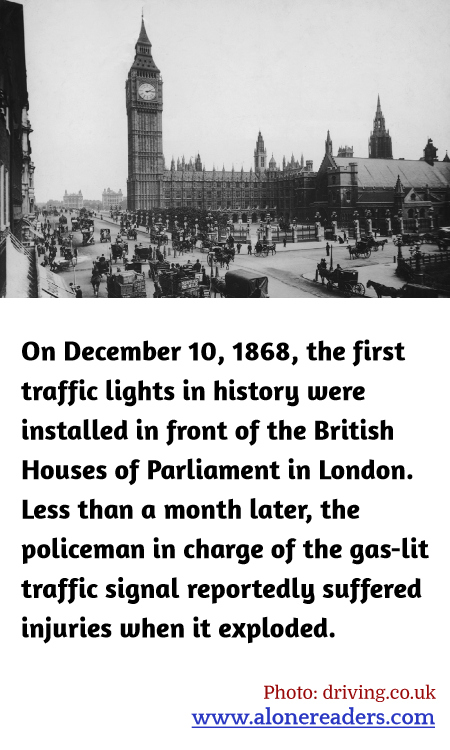
On December 10, 1868, the streets of London witnessed a significant innovation aimed at regulating the increasingly chaotic flow of traffic; the world's first traffic lights were installed outside the British Houses of Parliament. This pioneering venture marked the beginning of modern traffic management systems. The invention, attributed to railway engineer John Peake Knight, was inspired by the signaling systems used on railway networks. The system was quite primitive by today's standards, composed of semaphore arms and gas-lit lamps for night use, manually operated by police officers.
Knight's design featured three arms that would signal "stop" and "go" during the day and red and green gas lights for nighttime visibility, to control the movement of horse-drawn carriages and pedestrians. This early traffic light bore a resemblance to the railway signals of the time, which is reflective of the innovation's origins in railway signaling.
However, the world's first traffic light also came with its share of problems. Less than a month after its installation, the gas-lit traffic signal exploded due to a leak, injuring the policeman who was operating it. This incident highlighted the dangers of using gas as a source of light and led to the removal of the signal. Despite its initial failure, the concept of controlling traffic using signals persisted and has since evolved into a critical component of urban infrastructure worldwide.
Today, traffic lights are automated, powered by electricity, and use universally recognizable color codes, a far cry from their gas-lit, manually operated forerunner. They play a key role not just in vehicular traffic management but also in pedestrian safety. The humble beginnings of these traffic management tools remind us of the importance of adapting and improving urban planning technologies and practices, always with public safety and efficiency in mind.
