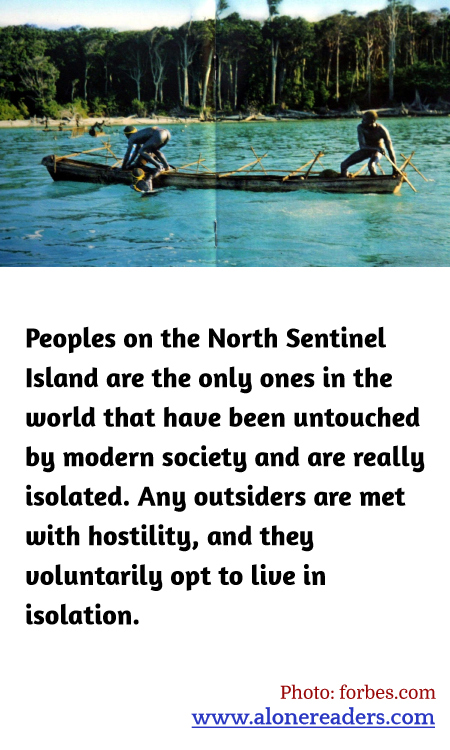
One of the most enigmatic and isolated tribes in the world, the Sentinelese people of North Sentinel Island have consistently piqued global curiosity and concern. Located in the Bay of Bengal, part of the Andaman Islands, this small and heavily forested island is home to a group that has resisted contact with the outside world for centuries. The Sentinelese's vehement defense of their isolation suggests a deliberate choice to remain disconnected from modern society.
The interactions that have occurred between the Sentinelese and outsiders have usually ended in hostility. In the rare instances when explorers or fishermen accidentally strayed too close to their shores, they were met with a barrage of arrows and spears, emphasizing the tribe's determination to avoid external influences and maintain their way of life. This intense defense mechanism underscores not just their ability to survive without external contact but also their awareness of the dangers that such contact can bring.
The Indian government, which has jurisdiction over North Sentinel Island, has made it illegal to approach within five kilometers of the island to protect the health and sovereignty of the Sentinelese. Their lack of resistance to common diseases could make even minor exposure to outsiders deadly, a fact gruesomely highlighted in past unfortunate encounters. Furthermore, preserving their autonomy is seen as crucial to their cultural preservation.
Anthropologists and researchers speculate that the Sentinelese have lived in their island fortress for up to 55,000 years, possibly making them one of the last communities to remain virtually untouched by modern civilization. Their tools, language, and practices remain a mystery, observed only from distant, non-intrusive methods or the accounts of those few who observed them up close in the past.
Despite the curiosity and sometimes the controversy that surrounds the Sentinelese, their story raises important questions about the ethics of contact. The global community faces a moral dilemma: the desire to learn more about a remarkably isolated group and the imperative to respect their palpable will to remain undisturbed. The preservation of such a unique way of life, which has disappeared almost everywhere else on Earth, may offer insights not only into the past of humanity but also into diverse modes of existence and resilience. Meanwhile, strict enforcement of no-contact laws and continuous monitoring for illegal activities, like poaching and fishing near the island, are essential to protect these vulnerable islanders from external threats. The fate of the Sentinelese remains a poignant reminder of the breadth of human diversity and the complexities of protecting those who choose isolation in a hyper-connected world.
