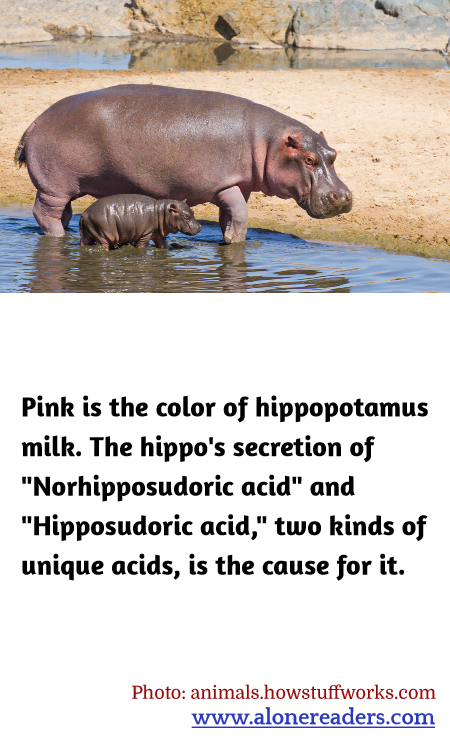
Pink may not be the first color that comes to mind when thinking about milk, but in the unique case of hippopotamus milk, it's a startling reality. This unusual characteristic can be traced back to two special acids that hippos secrete: "Norhipposudoric acid" and "Hipposudoric acid." These substances are not only fascinating due to their impact on the coloration of hippo milk but also play an essential role in the animals' survival.
Norhipposudoric acid and Hipposudoric acid are both types of pigmented sweat that hippos excrete, which have antimicrobial properties. These acids act as a natural sunscreen, protecting the hippos' sensitive skin from the harsh African sun while also preventing the growth of bacteria in their hot, humid environments. Over time, this secretion mixes with the hippos' milk, leading to its distinctive pink hue.
The coloration of hippo milk is more than just a curiosity; it represents a significant evolutionary adaptation. The presence of these acids demonstrates the immense challenges hippos face in their natural habitats and their unique solutions to such challenges. While cute and seemingly whimsical, the pink color of their milk adds to our understanding of the adaptive capacities of wildlife.
Further studies into these unique acids and their properties might provide us with better insights into the ways all animals adapt to their environments. This could lead to more effective conservation strategies that are tailored to the specific needs and challenges faced by species like the hippopotamus. Meanwhile, the revelation about hippo milk’s pink color serves as yet another reminder of the wonders of the natural world and the endless surprises it holds.
