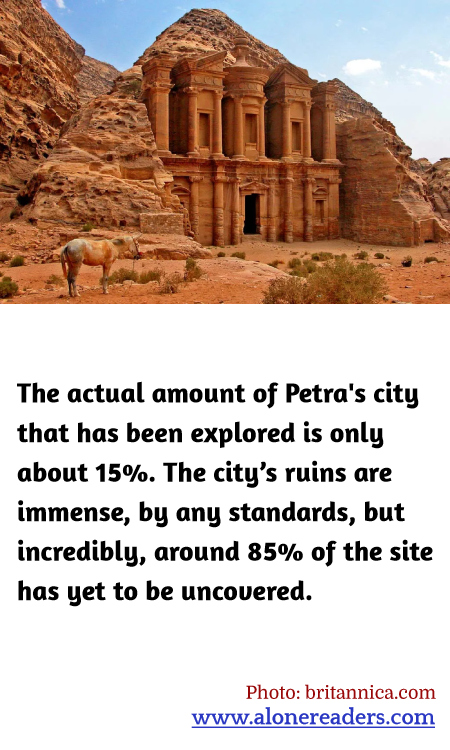
Petra, the ancient city carved directly into the rose-red sandstone cliffs of southern Jordan, remains one of the world's most enigmatic and picturesque ancient sites. Known for its architectural grandeur and complex hydraulic engineering systems, Petra's allure extends beyond its iconic treasury, the Al-Khazneh, and into its vast and, as yet, largely unexplored expanse. Observations and estimates suggest that what is visible and accessible in Petra today —its monumental tombs, temples, and a Roman-style theatre— constitutes only about 15% of the entire city. The remaining 85% still lies buried, hidden beneath centuries of desert sands, holding potentially groundbreaking insights into Nabataean culture, economics, and daily life.
This relatively small fraction of exploration is due not only to the site's enormous scale but also to the myriad challenges associated with archaeological excavations. These include the technical difficulties in excavating sandstone, a material that is both fragile and unpredictable, the need for careful preservation of the site's already exposed structures, and the substantial funding required for large-scale archaeological projects. There are also concerns about the impact of increased tourist footfall, which can accelerate the deterioration of the newly exposed sites.
Nonetheless, the unexplored areas of Petra represent a tantalizing frontier for archaeologists. Preliminary surveys and occasional small-scale excavations have hinted at the presence of extensive residential areas, markets, and potentially even more monumental architecture awaiting discovery. This hidden part of Petra could provide unprecedented insights into the Nabataean way of life, helping historians and archaeologists piece together aspects of their society that remain mysterious, such as their religious practices, social structures, and interactions with neighboring civilizations.
Advances in technology might play a crucial role in uncovering the secrets of Petra's unexplored sectors. Ground-penetrating radar, satellite imagery, and digital mapping techniques offer non-intrusive means to identify promising areas for excavation and study. These technologies could help minimize the impact on the physical site while maximizing archaeological and historical yields.
The potential findings lying in the unexplored areas of Petra could not only redefine current understanding of the Nabataean civilization but also offer new data about the broader historical interactions in the region. As each layer of sand is removed, the hope is that Petra will slowly reveal more of its stories, which have been preserved beneath the surface for thousands of years. The task of fully uncovering Petra is monumental, but it is also a crucial endeavor in the quest to comprehend our shared human past and preserve it for future generations.
