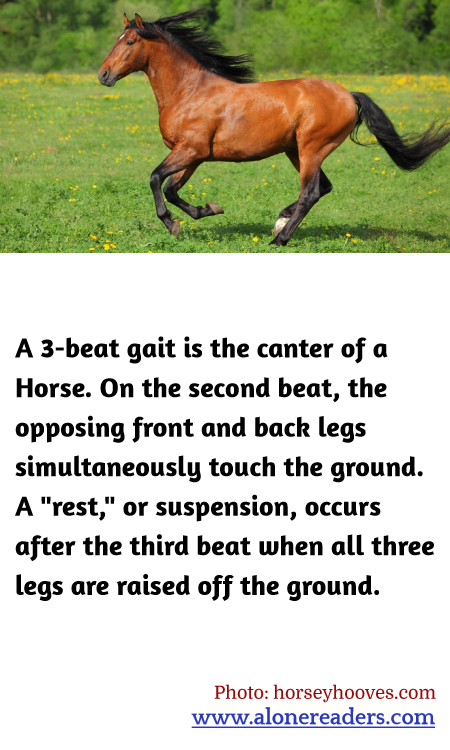
The canter, a three-beat gait of a horse, exhibits a unique pattern in its sequence of footfalls that distinguishes it from other gaits such as the walk or gallop. In the canter, one of the horse's rear legs - the right or left, depending on the direction - strikes the ground first. This is the initial beat. Followed by this, the second beat occurs simultaneously as the opposing front leg and the other rear leg touch down together. This synchronization provides the canter its characteristic rolling motion that is smoother than a trot but less frenetic than a gallop.
The third and final beat in the sequence involves the remaining front leg making contact with the ground, after which all four legs briefly achieve a moment of suspension. During this phase, none of the horse's hooves are in contact with the ground, giving both the horse and rider a moment of weightlessness. The duration of this suspension is a key factor that influences the feel and speed of the canter. More extended periods of suspension typically result in a more elevated, slower canter, whereas shorter periods lead to a quicker motion.
This gait is frequently used in various equestrian disciplines for its balance and moderate pace, making it ideal for jumping and other activities requiring controlled acceleration and maneuverability. Riders often prefer the canter for its relatively smooth motion, which is less jarring than the trot and allows for easier control and steadiness, especially on curved paths and during transitions from one maneuver to another.
Understanding and mastering the canter is essential for equestrian athletes and casual riders alike, as it serves as a fundamental gait that leverages both grace and power of the horse. Whether for leisure riding or competitive equestrian sports, the canter remains a deeply admired and practiced gait, epitomizing the harmony and capable athleticism of the horse.
