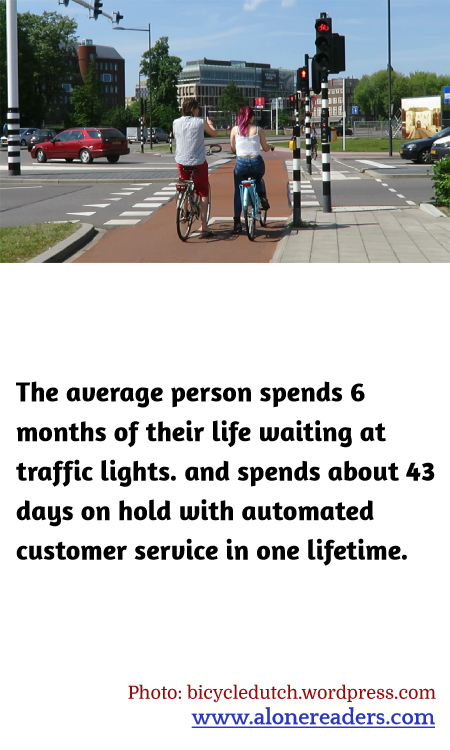
The passage of time in daily life is often marked by periods of waiting, some of which accumulate to startling totals over a lifetime. Two common examples are the time spent waiting at traffic lights and the time spent on hold with automated customer service systems. Surprisingly, an average person spends approximately six months of their life waiting at traffic lights. This statistic points to the considerable amount of time that individuals spend in their vehicles, contributing not only to personal time expenditure but also raising concerns about environmental impacts and efficiency in urban planning.
Similarly, another significant chunk of time is consumed by interactions with customer service systems. Over one's lifetime, about 43 days are spent dealing with automated customer service on the phone. This figure reflects the increasingly automated interactions between businesses and customers, where technology serves as both a convenience and a barrier. The frustration and time wasted in navigating these systems can lead to customer dissatisfaction and raises questions about the effectiveness of automation in enhancing customer service experiences.
Both statistics highlight areas of modern life where time, a precious commodity, is not optimally used. On the urban planning front, improving traffic flow and reducing waiting times at lights can not only save time but also decrease carbon emissions and enhance the quality of urban living. Intelligent traffic management systems and the development of smart cities with efficient transport networks promise some relief in future decades.
In terms of customer service, businesses are beginning to realize that while automated systems save on labor costs, they also risk alienating customers. The move towards more intuitive, AI-driven customer service could help in reducing wait times and improving service efficiency. Additionally, providing more robust self-service options that resolve issues without needing to wait on hold could enhance customer satisfaction.
In conclusion, recognizing the scale of time spent on seemingly minor and repetitive activities can lead to improvements that not only save time but also improve the quality of everyday life. Whether it is by upgrading urban infrastructure or by enhancing customer service technologies, there is a significant scope for reducing the time individuals spend waiting. This not only improves individual life quality but also enhances overall societal productivity and satisfaction.
