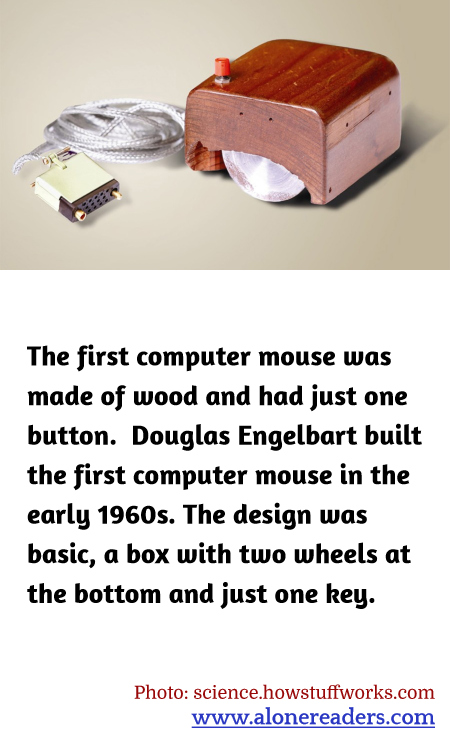
In the burgeoning era of computer technology, an intriguing development emerged during the early 1960s that would revolutionize the way humans interact with machines. This breakthrough was the creation of the first computer mouse, a device that introduced a tangible way to navigate the digital world. Its inventor, Douglas Engelbart, was a visionary whose work was pivotal in the evolution of modern computing interfaces.
The prototype of this seminal device was surprisingly simple yet ingenious. Made of wood, the original mouse was essentially a small box. The simplicity of its design—featuring a single button—belied its profound potential. Underneath the wooden casing, the device housed two wheels positioned perpendicular to each other, which allowed it to track motion in the X and Y axes when moved across a surface. This design was crude by today's standards, but it laid the foundation for the sophisticated pointing devices we use today.
Engelbart's invention was part of a larger project aimed at augmenting human intellect through technology, which he showcased in a 1968 demonstration that later came to be known as "The Mother of All Demos." This landmark presentation not only introduced the mouse but also featured the first uses of hypertext, networked computers, and video conferencing.
The practical application and widespread adoption of the computer mouse took several years to materialize. As technology progressed, the design of the mouse evolved significantly. Mechanical mice with a rolling ball came to dominate the market, later giving way to optical mice that use light to detect movement and, more recently, to laser technology for even greater accuracy.
Today, the computer mouse comes in various shapes and forms, from traditional two-button devices to complex units featuring multiple programmable buttons, touch surfaces, and gyroscopic sensors that allow for 3D manipulation. However, all of them trace their origin back to Douglas Engelbart's wooden prototype—a testament to the enduring impact of his innovation.
The invention of the computer mouse is a reminder of how even the most humble beginnings can lead to monumental shifts in technology and culture. Engelbart's vision for human-computer interaction continues to influence new generations of technologies, ensuring that his legacy lives on in every click and scroll.
