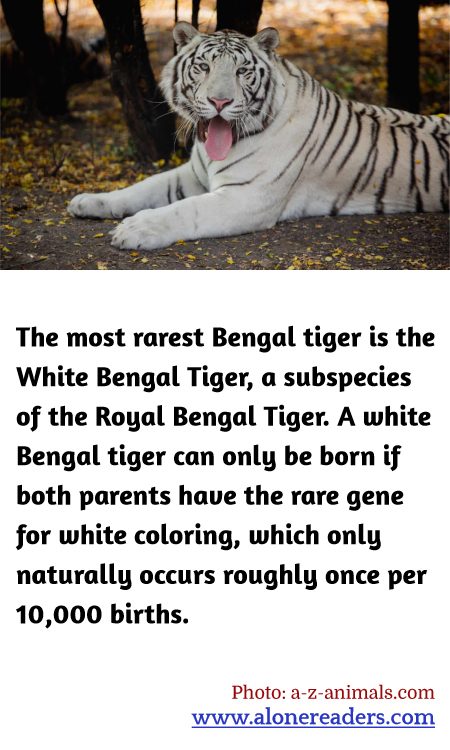
The White Bengal Tiger is a mesmerizing variant of the Royal Bengal Tiger, distinguished by its striking white fur and piercing blue eyes. This rare coloration is the result of a recessive gene that both parents must carry, making the occurrence of such tigers in the wild exceedingly rare, roughly estimated at one in every 10,000 tiger births. Unlike albinism, which results in a complete lack of pigment, the white fur of these tigers is due to a lack of the red and yellow pheomelanin pigments that normally produce the orange coloration in Bengal tigers.
White Bengal Tigers mostly occur in the wild in the Indian subcontinent, although it is now rarer to find them in their natural habitats due to the effects of poaching and habitat loss. Furthermore, the specific gene pool necessary for their birth is limited, greatly reducing the likelihood of these majestic creatures being born in the wild. Despite this rarity, they have been bred in captivity. However, breeding programs, particularly those which are unregulated, can be controversial due to issues surrounding inbreeding and the focus on aesthetic characteristics rather than genetic diversity.
The White Bengal Tiger is not just a biological rarity; it also holds deep cultural significance in various traditions and mythologies, symbolizing strength and awe-inspiring beauty. Conservation efforts for White Bengal Tigers are part of broader strategies aimed at preserving the Bengal tiger species from extinction. These initiatives include protecting habitats, preventing poaching, and maintaining genetic diversity within captive populations to support healthy tigers.
Thus, while they epitomize the incredible natural diversity within big cat species, the White Bengal Tigers also remind us of the critical need for focused conservation efforts to ensure that future generations may also experience the wonder of their presence. Through sustained environmental conservation efforts and responsible breeding programs, there is hope that this rare tiger can continue to thrive both in the wild and in managed care settings.
