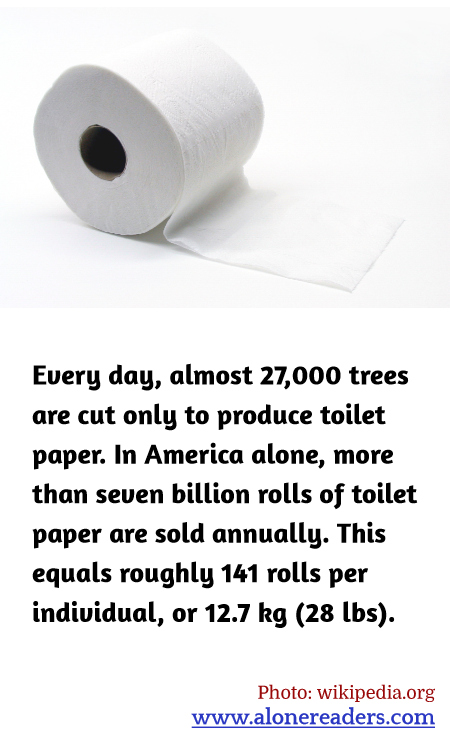
The environmental impact of everyday household products is often underestimated, and this is particularly true for items as ubiquitous as toilet paper. Due to its extensive use, toilet paper production has significant ecological consequences. Approximately 27,000 trees are chopped down each day solely to meet the global demand for toilet paper, highlighting a considerable strain on forest ecosystems.
In the United States, the consumption of toilet paper is particularly high, with over seven billion rolls sold every year. This astonishing figure breaks down to about 141 rolls per person annually, weighing around 28 pounds per individual. This level of consumption is not just a matter of convenience but also a considerable ecological concern given that it directly relates to the amount of raw material (wood) required for production.
The process of converting trees into toilet paper is not only about felling trees; it also involves considerable water and energy consumption during manufacturing. Additionally, the bleaching process, which is used to make toilet paper white, can lead to the release of harmful chemicals like dioxins and furans, which can contaminate water systems.
Given these environmental implications, there is growing advocacy for more sustainable alternatives. These include bamboo and recycled paper, which do not rely on virgin wood pulp, thus reducing the burden on forests. Bamboo, for instance, grows rapidly and requires less water and no pesticides, making it a more sustainable option compared to traditional wood pulp.
Furthermore, consumer habits also play a role in mitigating environmental impact. Reducing usage, opting for products made from recycled materials, and supporting brands that prioritize sustainable production practices can all contribute to lessening the environmental footprint of our toilet tissue consumption.
In conclusion, while the use of toilet paper is ingrained in modern hygiene practices, it is crucial for both manufacturers and consumers to consider the environmental costs. Transitioning to sustainable materials and being mindful of consumption patterns are steps in the right direction, ensuring that one of the most basic sanitary conveniences does not become an overwhelming burden to our planet.
