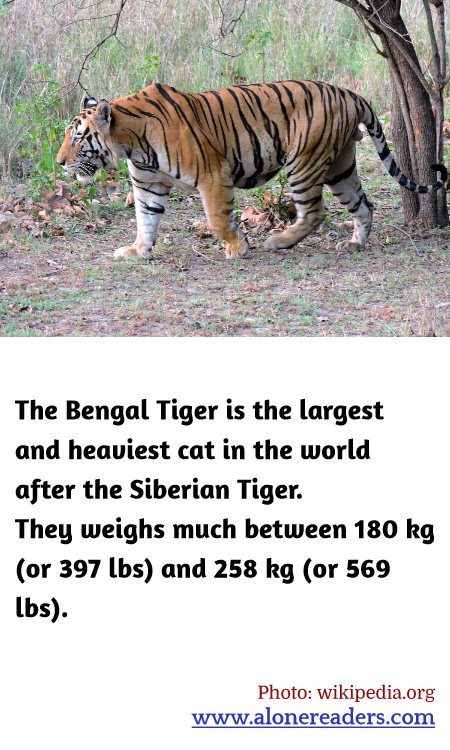
The Bengal tiger, a majestic symbol of strength and grace, stands as one of the largest and most powerful members of the big cat family. Predominantly found in India with smaller populations in Bangladesh, Nepal, and Bhutan, this tiger species is not just a crucial part of the ecosystem but also a vital element of the cultural and religious fabric in the region.
Adult Bengal tigers typically weigh between 180 kg (397 lbs) and 258 kg (569 lbs), making them slightly smaller than their Siberian counterparts, yet they are equally formidable. Male tigers are generally larger and heavier than the females, exhibiting a vibrant coat that ranges from a light yellow to a deep orange color, with a pattern of dark stripes unique to each individual. This striking coloration provides them with excellent camouflage as they move silently through the forests and grasslands of their habitats.
As an apex predator, the Bengal tiger plays a pivotal role in maintaining the balance within its ecosystem. By preying on medium and large-sized herbivores such as deer, wild boar, and even buffalo, the tiger helps in controlling these populations, thus preventing overgrazing and supporting a diverse range of plant and animal life. This biodiversity is essential for the health and stability of the environment.
Despite their ecological importance, Bengal tigers face numerous threats, primarily due to human activities. Habitat loss, poaching, and conflicts with humans have dramatically reduced their numbers over the centuries. At the start of the 20th century, there were estimated to be around 40,000 Bengal tigers in the wild, but today, fewer than 2,500 are believed to exist. This drastic decline has placed them on the International Union for Conservation of Nature’s (IUCN) Red List as an endangered species.
Efforts to conserve the Bengal tiger are being implemented across its range. These include anti-poaching measures, habitat restoration projects, and the creation of tiger corridors that allow tigers to move between isolated patches of forest safely. Additionally, various educational programs aim to raise awareness and promote coexistence between local communities and tigers.
The survival of the Bengal tiger is uncertain, but through continued conservation efforts and a commitment to sustainable development, there is hope that this iconic animal will continue to roam the wild for generations to come. Their preservation is not only critical for maintaining ecological balance but also for the cultural heritage they represent.
