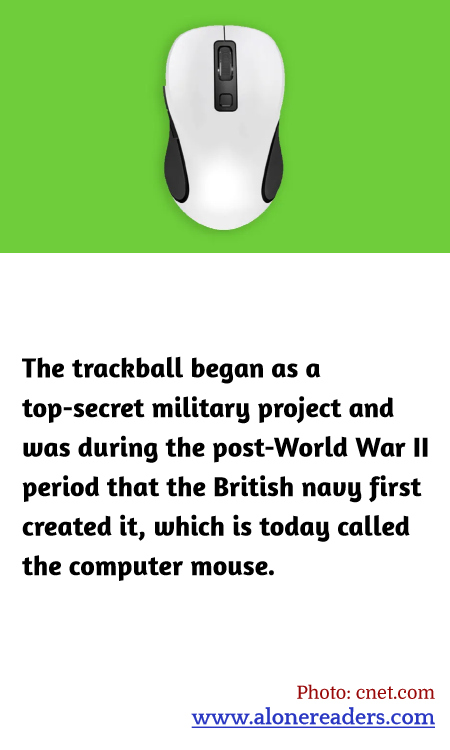
The trackball, a precursor to the modern computer mouse, has an intriguing history rooted in military innovation. Initially developed during the post-World War II era, the trackball was not designed for the casual user or even office work but was born out of the need for improved military command and control systems. Its invention is credited to the Royal Navy, which was seeking more efficient ways to plot the course and position of various objects during military operations.
The first trackball device was crafted in 1946 by Tom Cranston, Fred Longstaff, and Kenyon Taylor, working for the Royal Canadian Navy. It was part of a larger project known as DATAR - Digital Automated Tracking and Resolving. Unlike today’s mouse-driven mechanisms, the original trackball used a large, five-pin bowling ball-sized sphere, which users rotated to relay coordinates to a computer. The system was designed to help naval officers calculate the positions of ships and aircraft, providing a revolutionary way to handle data input.
This early innovation was highly classified, and it took several years before the concept could evolve into something applicable for broader uses. Eventually, the trackball technology was adapted for use with radar plotting systems and was first publicly acknowledged during the 1950s.
However, it wasn't until the 1960s that the trackball found its way into mainstream computing, thanks largely to the work of other inventors like Douglas Engelbart. Engelbart, often credited with inventing the mouse, was influenced by the concept of the trackball. In 1963, he and his team at the Stanford Research Institute invented the first prototype of what became known as the computer mouse, adapting the idea of a ball tracking movement to create a smaller, more practical device that used a roll-on-desk mechanism instead of being spun manually.
As computing transitioned from military use to business and personal use, the mouse quickly overshadowed the trackball because of its greater ease of use and more intuitive operation for new users. Yet, the trackball still exists today, preferred by many for its precision and ergonomics in specific applications such as graphic design and gaming.
The legacy of the trackball underscores how military needs have often driven technological innovation that later finds everyday utility, illustrating the fascinating journey of tech from specialized tools of war to ubiquitous aspects of daily life.
