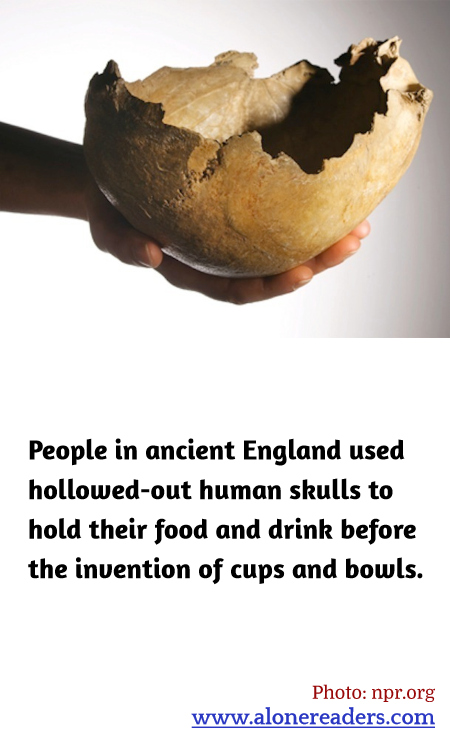
In ancient England, resourcefulness extended into every aspect of life, including dining and social rituals. Before the widespread use of manufactured cups and bowls, early inhabitants found innovative uses for materials readily available in their environment. Among the most striking of these practices was the use of hollowed-out human skulls as containers for food and drink. This custom underscores a markedly different cultural relationship with death and the human body than what is generally observed in modern times.
The practice of using human skulls as containers is rooted in both necessity and symbolic significance. In the absence of materials like ceramics or metals, which would later become commonplace, skulls provided a readily available, durable alternative. Anthropologically, this aligns with observations of various ancient cultures around the world, which similarly employed natural materials in daily use. Moreover, beyond mere practicality, employing a human skull as a container might also have held ritualistic importance, possibly relating to ancestor veneration or the belief in harnessing the power of the deceased.
Evidence of this practice has been gathered from various archaeological sites, where excavations have unearthed human skulls showing modifications made to accommodate their use as drinking cups or bowls. Carbon dating and analysis of these artifacts help researchers understand the periods during which these practices prevailed, and further biochemical analysis can offer clues about what they held.
However, as civilizations evolved, so too did technology and societal norms. The introduction of pottery and metalwork brought about a shift in material culture, gradually phasing out the use of skulls in favor of more efficient and less macabre alternatives. Despite this evolution, the early use of skulls is a compelling illustration of human ingenuity in the face of limited resources.
Overall, the historical use of human skulls in ancient England is a reminder of the vastly different ways human remains have been perceived and utilized across cultures and eras. It highlights adaptability and respect for the deceased within the context of their times, providing a rich area for exploration in both historical and ethical dimensions in anthropology.
