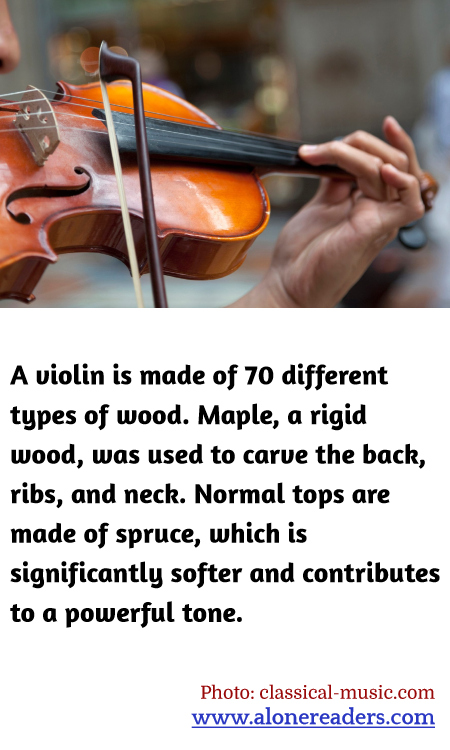
The violin, with its rich history and intricate design, stands as one of the most complex and elegant string instruments. Contrary to popular belief, a typical violin is not composed of 70 different types of wood. Instead, its construction primarily revolves around two types of wood—maple and spruce—each chosen for their specific properties that contribute to the instrument’s sound quality and durability.
Maple, known for its hardness and density, is used for the back, ribs, and neck of the violin. This wood is ideal for these parts of the instrument due to its ability to support the tension of the strings and maintain the structural integrity of the violin. The choice of maple is crucial not only for its strength but also for its aesthetic qualities; it often features beautiful flame patterns that enhance the visual appeal of the instrument.
On the other hand, the top of the violin, or the soundboard, is typically made from spruce. This wood is softer than maple, which allows it to vibrate more freely. These vibrations are essential for the production of sound, and the quality of spruce helps in creating the violin's powerful and nuanced tones. The soundboard is also designed with intricacy, featuring carefully placed sound holes that are essential for proper sound projection.
The combination of maple and spruce in violin construction is a result of centuries of craftsmanship and evolution, aimed at finding the perfect balance between durability and sound quality. While other woods and materials might be used in minor parts of the violin, such as the fittings (including the pegs and chinrest), it is maple and spruce that play the most critical roles in the acoustical and physical properties of the violin.
Overall, the use of these woods is a testament to the careful thought and expertise that luthiers, the craftsmen who build and repair string instruments, put into each violin. This ensures that each instrument can produce the desired sound aesthetics and withstand the rigors of use by musicians, from beginners to world-class professionals. In essence, the complexity of the violin’s construction and the quality of its materials are crucial for its ability to produce the beloved sounds that have resonated through centuries of music history.
